
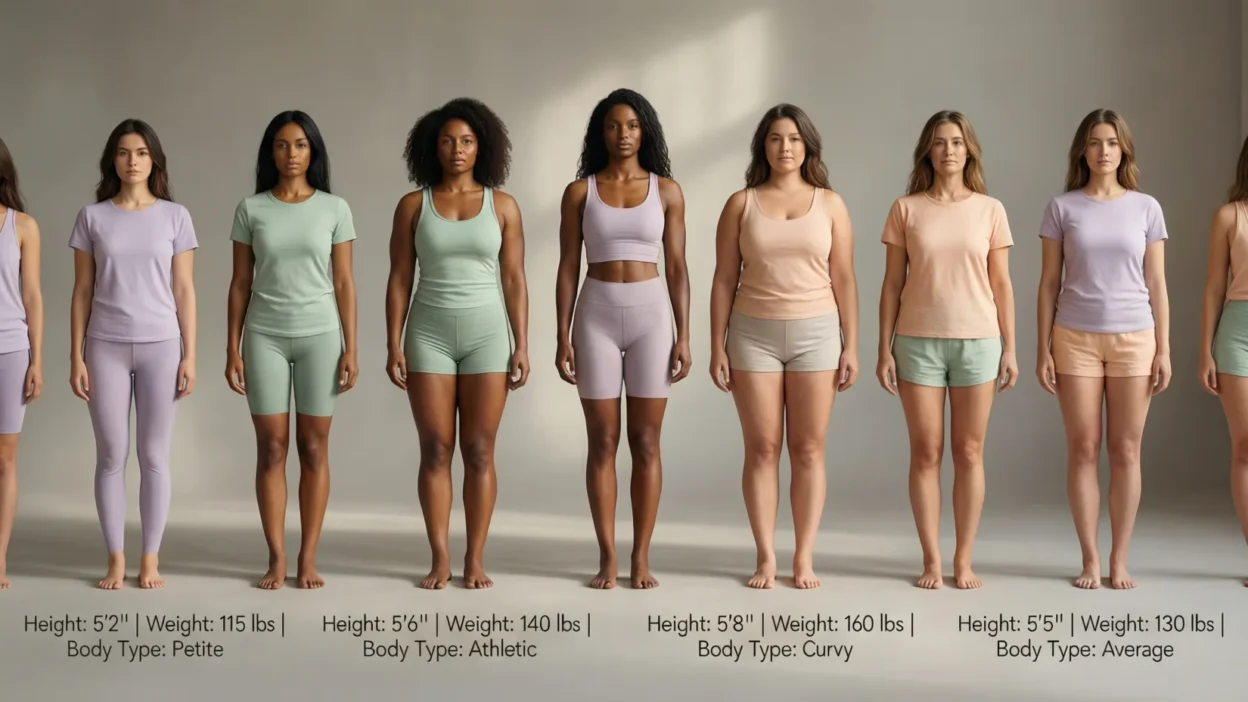
Understanding a women’s weight chart can be helpful for anyone looking to better understand their health, fitness, or body composition. These charts are commonly used as general reference tools to estimate a healthy weight range based on factors such as height, age, and body structure. However, weight alone does not define overall health, and numbers on a scale never tell the full story.
Women’s bodies naturally change over time due to hormones, lifestyle, muscle mass, and life stages such as pregnancy or menopause. This is why most modern weight charts focus on healthy weight ranges rather than a single “ideal” number. When used correctly, a women’s weight chart can provide useful guidance, help identify potential health risks, and support long-term wellness goals.
In this guide, we’ll break down how women’s weight charts work, explore weight ranges by height and age, explain BMI and its limitations, and show you how to use these tools in a realistic, healthy way.
What Is a Women’s Weight Chart?
A women’s weight chart is a reference tool designed to estimate a healthy weight range for adult women based primarily on height and, in some cases, age and body frame size. These charts are widely used in healthcare, fitness, and wellness settings to provide general guidance rather than exact targets. Instead of identifying a single “perfect” weight, modern charts focus on ranges that reflect natural variations in body composition.
Most women’s weight charts are derived from medical research, population data, or formulas such as Body Mass Index (BMI). They help identify whether a person may fall into categories such as underweight, healthy weight, overweight, or obese. However, these classifications are screening tools, not medical diagnoses.
It’s important to understand that weight charts do not account for all individual factors. Muscle mass, bone density, genetics, and lifestyle habits can significantly influence a woman’s healthy weight. For example, athletic women often weigh more due to higher muscle mass, even though they are metabolically healthy.
When used appropriately, a women’s weight chart can support health awareness, goal-setting, and conversations with healthcare professionals. Used alone or rigidly, however, it may lead to unnecessary comparison or misunderstanding—making context and personal factors essential.
Types of Women’s Weight Charts
There are several types of women’s weight charts, each designed for a slightly different purpose. Understanding these variations can help you choose the most appropriate chart for your personal health goals.
Ideal weight charts are based on formulas developed decades ago to estimate a weight considered “ideal” for a given height. While still referenced today, these charts often rely on limited data and do not fully reflect modern understanding of body diversity.
Healthy weight charts are more commonly used in current health guidance. They focus on weight ranges associated with lower health risks rather than a single number, making them more realistic and flexible for most women.
Average weight charts are based on population statistics and show what most women weigh at certain heights or ages. However, “average” does not necessarily mean healthy, as these figures reflect trends rather than optimal health outcomes.
BMI-based charts categorize weight using height and weight ratios and are widely used in medical settings. Although useful for large-scale screening, BMI does not distinguish between fat and muscle mass.
Some charts also account for frame size, adjusting weight ranges for women with small, medium, or large bone structures. Using the right type of chart ensures more accurate and meaningful interpretation.
Why Height Matters in Women’s Weight Charts
Height plays a central role in determining a woman’s healthy weight range, which is why most women’s weight charts are organized by height. Taller women naturally have more bone mass, muscle, and overall body volume, meaning a healthy weight for someone who is 5’10” will differ significantly from that of someone who is 5’2”.
Weight charts use height as a baseline to estimate proportional body mass. Rather than aiming for a single number, these charts provide a range that reflects natural variations in body composition. Two women of the same height can fall at different points within that range and still be equally healthy, depending on factors such as muscle mass, genetics, and activity level.
Height-based charts are especially useful because they are simple, widely understood, and easy to apply. They offer a quick reference point for identifying whether weight changes may warrant closer attention. However, height alone does not capture the full picture of health. Frame size, fat distribution, and lifestyle habits all influence what a healthy weight looks like for an individual.
For this reason, height-based weight charts should be viewed as a starting point—one tool among many for assessing overall health and wellness.
Women’s Weight Chart by Height: How to Read It
A women’s weight chart by height provides a healthy weight range corresponding to different heights, typically listed in feet and inches or centimeters. These ranges are designed to reflect body mass that is generally associated with lower health risks, rather than a single ideal number. Understanding how to read the chart correctly is key to using it effectively.
To use a height-based weight chart, first locate your height on the chart. Next, identify the weight range associated with that height. If your weight falls anywhere within this range, it is generally considered healthy for your height. Being near the upper or lower end of the range does not automatically indicate a problem, as individual factors such as muscle mass, bone density, and body frame play an important role.
It’s also important to remember that weight naturally fluctuates due to hydration, hormonal cycles, and daily activity. For this reason, charts are best used to observe long-term trends rather than short-term changes. Women who are very athletic or strength-trained may weigh more while remaining metabolically healthy.
Height-based charts are most effective when combined with other health indicators, such as waist measurements, physical fitness levels, and overall well-being, rather than used in isolation.
Understanding Weight Ranges Instead of Exact Numbers
One of the most important aspects of a women’s weight chart is that it presents weight as a range, not a fixed target. This approach reflects the natural diversity of women’s bodies and helps avoid unrealistic expectations. Healthy weight is not a single number but a spectrum that accounts for differences in body composition, genetics, and lifestyle.
Weight ranges allow flexibility for factors such as muscle mass and bone density. For example, two women of the same height may differ significantly in weight, yet both can be healthy. A woman with more muscle mass may fall toward the higher end of the range, while someone with a smaller frame may fall closer to the lower end. Neither position within the range is inherently better or worse.
Focusing too narrowly on an exact number can lead to unnecessary stress or unhealthy behaviors. Daily weight fluctuations are normal and influenced by hydration, hormonal changes, and digestion. This is especially relevant for women, whose weight can vary throughout the menstrual cycle.
By using weight ranges as a guideline rather than a rule, women can shift their focus toward sustainable health habits—such as balanced nutrition, regular physical activity, and adequate rest—rather than chasing a specific number on the scale.
The Role of Body Frame Size in Women’s Weight Charts
Body frame size is an often-overlooked factor in determining a woman’s healthy weight range. While height provides a useful baseline, frame size helps explain why women of the same height can have different healthy weights. Frame size generally refers to bone structure and is commonly categorized as small, medium, or large.
Women with a small frame typically have lighter bones and narrower shoulders and hips, placing them toward the lower end of a healthy weight range. Those with a large frame often have heavier bones and broader proportions, which may place them toward the higher end of the range without indicating excess body fat.
Frame size is commonly estimated by measuring wrist circumference relative to height. Although this method is not perfect, it offers a simple way to adjust weight chart interpretations for individual structure. Ignoring frame size can sometimes lead to misleading conclusions about whether a woman’s weight is healthy.
By factoring in frame size, women’s weight charts become more personalized and realistic. This approach reinforces the idea that healthy weight is not one-size-fits-all and that natural body structure plays a meaningful role in overall health assessment.
Women’s Weight Chart by Age: Why Age Matters
Age is another important factor that influences a woman’s healthy weight. As women move through different life stages, natural changes in metabolism, hormone levels, and muscle mass can affect how the body stores and uses energy. This is why some women’s weight charts include age-based ranges alongside height.
In early adulthood, metabolism tends to be more efficient, and muscle mass is generally higher. As women enter their 30s and 40s, metabolic rate may gradually slow, and hormonal shifts can influence fat distribution. During menopause, declining estrogen levels often contribute to changes in where weight is carried, particularly around the abdomen.
Weight charts by age are not meant to encourage weight gain or loss but to reflect realistic expectations across the lifespan. A healthy weight in your 20s may not look exactly the same in your 50s, even with similar habits. Maintaining muscle through strength training and staying physically active becomes increasingly important with age.
While age-based charts can provide helpful context, they should not override individual health markers. Energy levels, mobility, and metabolic health are often more meaningful indicators than age-related weight comparisons alone.
BMI and Its Role in Women’s Weight Charts
Body Mass Index (BMI) is one of the most commonly used tools in women’s weight charts and medical screenings. BMI is calculated by dividing a person’s weight by the square of their height, producing a numerical value used to categorize weight status. These categories typically include underweight, healthy weight, overweight, and obesity.
Healthcare providers often rely on BMI because it is quick, standardized, and useful for identifying potential health risks at a population level. Many women’s weight charts are based on BMI ranges that have been associated with increased or decreased risk of conditions such as heart disease, type 2 diabetes, and high blood pressure.
However, BMI has notable limitations, especially for women. It does not differentiate between muscle and fat, meaning muscular or athletic women may fall into higher BMI categories despite having low body fat. BMI also does not account for hormonal changes, pregnancy, aging, or differences in bone density.
For these reasons, BMI should be viewed as a screening tool rather than a definitive measure of health. When combined with other indicators—such as waist circumference, physical fitness, and metabolic health—it can offer more meaningful insight into overall well-being.
Frequently Asked Questions About Women’s Weight Charts
What is the ideal weight for women?
There is no single ideal weight for all women. Healthy weight depends on height, body composition, frame size, age, and lifestyle. Weight charts provide ranges rather than exact numbers to reflect these differences.
How much should a woman weigh for her height?
A woman’s healthy weight varies by height and individual factors. Height-based weight charts offer a general range, but muscle mass, bone density, and overall health should also be considered.
Is BMI accurate for women?
BMI can be a useful screening tool, but it has limitations. It does not distinguish between fat and muscle and may not accurately reflect health for athletic women, older adults, or during pregnancy.
Can a woman be healthy outside the weight chart range?
Yes. Many women fall outside standard weight chart ranges and are still healthy. Fitness level, metabolic health, and lifestyle habits are often better indicators than weight alone.
How often should women check their weight?
There is no universal rule. Some women prefer regular check-ins, while others find frequent weighing unhelpful. Monitoring overall health trends is more important than focusing on short-term weight changes.
Conclusion: Using Women’s Weight Charts as a Healthy Guide
A women’s weight chart can be a valuable tool when used with the right perspective. By offering healthy weight ranges based on factors such as height, age, and body structure, these charts provide general guidance rather than strict rules. They are most effective when viewed as part of a broader picture of health, not as a sole measure of well-being.
Throughout this guide, we’ve explored how weight charts work, why ranges matter more than exact numbers, and how factors like muscle mass, hormones, frame size, and age influence a woman’s healthy weight. We’ve also highlighted the limitations of tools like BMI and the importance of combining weight data with other health indicators.
Ultimately, health is not defined by a single number on a scale. Energy levels, strength, mobility, mental well-being, and sustainable habits all play a critical role. Weight charts should support informed decisions and positive lifestyle changes—not comparison or pressure.
By using women’s weight charts thoughtfully and, when needed, alongside professional guidance, women can focus on long-term health goals that respect both individuality and overall wellness.

Joseph is a passionate writer and quote curator at QuoteBlom.com, dedicated to bringing inspiration, wisdom, and a touch of motivation to every reader. With a keen eye for meaningful words and life-changing insights, Joseph carefully selects and shares quotes that uplift, empower, and spark thoughtful reflection. Whether you’re looking for a daily dose of positivity, love, or life advice, Joseph’s writings are designed to resonate with readers from all walks of life, making each visit to QuoteBlom.com a journey of inspiration.