
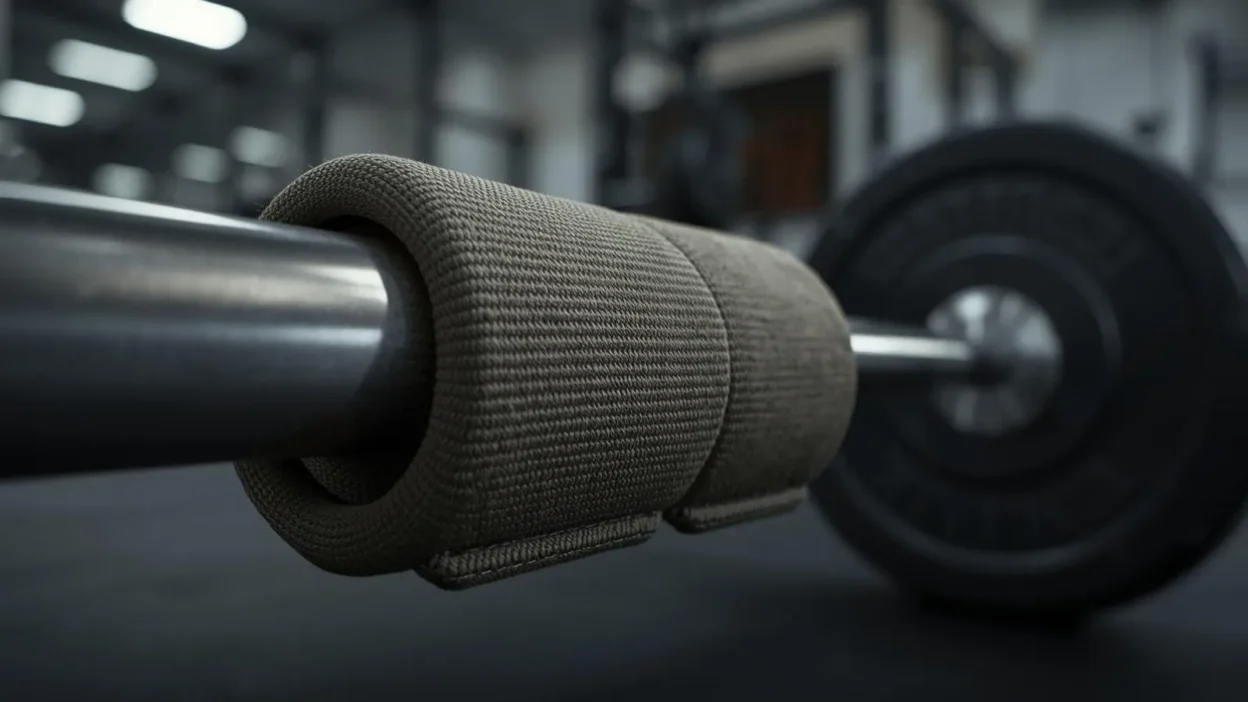
Weight lifting wrist straps have become one of the most popular accessories in modern strength training and for good reason. For many lifters, grip strength becomes the limiting factor long before the target muscles are fully worked. When your hands give out during heavy deadlifts, rows, or pull-ups, your progress can stall even though your back and legs are capable of more. Wrist straps are designed to solve this exact problem by improving grip security and reducing forearm fatigue, allowing you to focus on lifting heavier weights with better control and confidence.
Whether you’re a beginner learning proper technique or an advanced lifter pushing new personal records, understanding how and when to use weight lifting wrist straps can make a significant difference in your training results. In this complete guide, we’ll break down everything you need to know from the benefits and drawbacks to the different types of wrist straps and how to use them correctly so you can decide if they belong in your gym bag.
What Are Weight Lifting Wrist Straps?
Weight lifting wrist straps are strength-training accessories designed to enhance your grip on barbells, dumbbells, and machines during pulling exercises. They are typically made from durable materials such as cotton, nylon, or leather and wrap securely around the wrist while looping around the bar. By creating a stronger connection between your hands and the weight, wrist straps reduce the amount of grip strength required to hold the load.
The primary purpose of wrist straps is not to support the wrist joint itself, but to assist grip strength. This distinction is important, as wrist straps are often confused with wrist wraps, which are used for joint stability. Wrist straps allow lifters to move heavier weights or perform more repetitions by minimizing forearm fatigue especially during high-volume or heavy back training sessions.
Wrist straps are most commonly used in exercises where grip tends to fail before larger muscle groups, such as deadlifts, rows, pull-ups, shrugs, and rack pulls. By eliminating grip as the weakest link, lifters can better target muscles like the lats, traps, and hamstrings.
Originally popular among bodybuilders and powerlifters, wrist straps are now widely used by recreational gym-goers and athletes alike. When used correctly and strategically, they can be a powerful tool for increasing training intensity while maintaining proper lifting mechanics.
Wrist Straps vs Wrist Wraps vs Lifting Gloves
Wrist straps are often confused with wrist wraps and lifting gloves, but each serves a very different purpose in strength training. Understanding these differences will help you choose the right tool for your goals.
Wrist straps are designed to improve grip strength by securing the bar to your hands. They reduce the workload on the forearms and allow you to lift heavier weights or perform more reps during pulling movements. Their main function is grip assistance, not joint support.
Wrist wraps, on the other hand, are meant to stabilize the wrist joint. They are commonly used during pressing exercises such as bench presses, overhead presses, and squats. Wrist wraps help keep the wrist in a neutral position, reducing strain and improving force transfer but they do not help with grip.
Lifting gloves provide padding and protect the hands from calluses and blisters. While they can slightly improve comfort, they offer minimal grip assistance and can actually reduce bar feel for heavy lifts. Gloves are often favored by casual gym-goers rather than serious strength athletes.
In short, wrist straps are best for heavy pulling exercises, wrist wraps are ideal for joint support during pressing movements, and gloves are mainly for comfort and hand protection. Many experienced lifters use a combination of straps and wraps depending on the exercise, ensuring both performance and safety throughout their training sessions.
Benefits of Using Weight Lifting Wrist Straps
One of the biggest advantages of using weight lifting wrist straps is the immediate improvement in grip strength. By reducing the strain on your hands and forearms, straps allow you to hold onto the bar longer, especially during heavy or high-repetition sets. This means your grip no longer limits your performance before the target muscles are fully trained.
Another key benefit is the ability to lift heavier weights with better control. Exercises like deadlifts, barbell rows, and shrugs place a significant demand on grip strength. Wrist straps help maintain a secure hold on the bar, allowing you to focus on proper form and muscle activation rather than worrying about the bar slipping.
Wrist straps also help reduce forearm fatigue, which can be particularly useful during back-focused workouts. When your forearms are less fatigued, you can increase training volume and intensity without compromising technique. This leads to better stimulation of large muscle groups such as the lats, traps, and hamstrings.
Additionally, wrist straps can enhance training consistency by reducing the risk of grip-related failures. This is especially beneficial for advanced lifters pushing heavier loads or performing long training sessions. When used strategically, wrist straps become a practical tool for maximizing strength gains while maintaining safe and effective lifting mechanics.
Potential Drawbacks and Common Misconceptions
While weight lifting wrist straps offer clear benefits, they are not without potential drawbacks. The most common concern is over-reliance. Using wrist straps for every pulling exercise can limit the development of natural grip strength, which is an essential component of overall lifting performance. Grip strength plays a crucial role in functional strength, athletic performance, and many competitive lifting environments.
Another misconception is that wrist straps are “cheating.” In reality, wrist straps are simply a training tool. They do not lift the weight for you; they allow you to better target specific muscle groups when grip becomes the limiting factor. However, in some powerlifting and Olympic lifting competitions, wrist straps are not allowed, making it important to train without them as well.
There is also a learning curve associated with proper usage. Incorrect wrapping or relying on straps to compensate for poor technique can increase the risk of injury. Wrist straps should enhance good form, not replace it.
Some lifters believe wrist straps weaken the wrists themselves, but this is not accurate. Wrist straps do not provide joint supportthat role belongs to wrist wraps. When used correctly and selectively, wrist straps do not harm wrist health.
The key is moderation. Using wrist straps strategically such as for top sets or high-volume back work ensures you gain the benefits without sacrificing grip strength or long-term progress.
Types of Weight Lifting Wrist Straps
Not all weight lifting wrist straps are the same, and choosing the right type can make a noticeable difference in comfort, security, and performance. The most common style is the loop wrist strap, which features a single closed loop that wraps around the bar. This type is easy to use, durable, and ideal for beginners learning how to incorporate straps into their training.
Lasso-style wrist straps offer greater adjustability. They wrap fully around the wrist and allow the strap to be tightened or loosened as needed. This makes them a popular choice among bodybuilders who value comfort and flexibility during higher-volume workouts.
Figure-8 wrist straps are designed for maximum grip security. Shaped like the number eight, they loop around both the wrist and the bar, creating an extremely strong connection. These are commonly used for very heavy deadlifts and rack pulls, particularly by advanced lifters. However, they offer less freedom to release the bar quickly.
For Olympic lifting and dynamic movements, quick-release or Olympic-style straps are often preferred. These straps allow lifters to disengage the bar rapidly, making them safer for movements like cleans and snatches.
Wrist straps are also made from different materials such as cotton, nylon, and leather. Cotton offers comfort, nylon provides durability, and leather delivers maximum strength but less flexibility. Selecting the right type depends on your training goals and lifting style.
Exercises That Benefit Most from Wrist Straps
Weight lifting wrist straps are most effective during pulling exercises where grip strength often fails before larger muscle groups are fully fatigued. One of the most common examples is the deadlift. Whether performing conventional, sumo, or Romanian deadlifts, wrist straps allow you to maintain a secure grip on heavy loads, enabling better focus on hip drive and posterior chain engagement.
Barbell and dumbbell rows also benefit greatly from wrist strap use. Rows place continuous tension on the hands and forearms, especially during high-volume sets. Straps help keep grip fatigue from limiting back activation, allowing stronger contraction of the lats and upper back.
Pull-ups and lat pulldowns are another area where wrist straps can be valuable, particularly for lifters with weaker grip strength. Using straps allows you to increase repetitions or add weight while maintaining proper form and control throughout the movement.
Shrugs and rack pulls involve extremely heavy loads that can quickly overwhelm grip strength. Wrist straps help lifters hold heavier weights safely, leading to greater trap activation and strength gains.
Wrist straps are especially useful during long back-focused training sessions or hypertrophy workouts where grip fatigue accumulates over multiple exercises. However, they should be used selectively, ensuring that grip strength is still trained independently to maintain balanced strength development.
Who Should Use Weight Lifting Wrist Straps?
Weight lifting wrist straps can benefit a wide range of lifters, but their usefulness depends on experience level, training goals, and sport-specific demands. Intermediate and advanced lifters often gain the most value from wrist straps, as they typically lift heavier weights where grip strength becomes a limiting factor. For these lifters, straps help increase training intensity and volume without compromising form.
Bodybuilders commonly use wrist straps during back and trap workouts to maximize muscle engagement and reduce forearm fatigue. This allows for better isolation of target muscles and more effective hypertrophy-focused training. Powerlifters may use wrist straps during accessory work or volume sessions, even though straps are not allowed in competition lifts.
For beginners, wrist straps should be used cautiously. Early-stage lifters benefit from developing natural grip strength and proper technique before relying on assistance tools. That said, beginners performing high-repetition back workouts may occasionally use straps to maintain form when grip fatigue sets in.
Athletes in sports that rely heavily on grip strength such as rock climbing, wrestling, or martial arts may want to limit strap usage to avoid weakening sport-specific grip development.
Ultimately, wrist straps are best used as a supplemental tool rather than a permanent crutch. When applied strategically, they support progress while allowing grip strength to develop naturally over time.
How to Use Weight Lifting Wrist Straps Correctly
Using weight lifting wrist straps correctly is essential for maximizing their benefits while maintaining safety. Begin by placing your hand through the loop and tightening the strap around your wrist so it feels secure but not restrictive. The loose end of the strap should hang down from the palm side of your hand.
Next, grip the bar as usual and wrap the strap around it by rotating your wrist inward. The strap should coil tightly around the bar, creating friction and a firm connection between your hand and the weight. Make sure the strap lies flat against the bar rather than twisting, as this ensures even pressure and better control.
A common mistake is over-tightening the strap around the wrist. Wrist straps should assist grip, not cut off circulation or cause discomfort. Another mistake is relying on straps to compensate for poor form or weak fundamentals. Always establish proper lifting mechanics before incorporating straps into your routine.
For safety, avoid using figure-8 straps during movements where quick release is necessary unless you are experienced. Remove straps immediately after completing your set to restore natural hand movement.
When used properly and selectively, wrist straps enhance performance without compromising grip development or increasing injury risk.
How to Choose the Best Weight Lifting Wrist Straps
Choosing the right weight lifting wrist straps depends largely on your training style, goals, and comfort preferences. One of the first factors to consider is your primary type of lifting. If you focus on bodybuilding or general strength training, adjustable lasso-style straps offer versatility and comfort. For heavy deadlifts and maximal pulls, figure-8 straps provide unmatched security.
Material also plays a major role. Cotton straps are comfortable and affordable, making them ideal for beginners. Nylon straps are more durable and resistant to wear, while leather straps offer maximum strength but can feel stiff and less forgiving on the wrists.
Strap length and thickness affect both grip and ease of use. Longer straps provide more wrapping surface and stronger grip but may take longer to set up. Padding around the wrist can improve comfort during heavy sessions, especially for lifters training multiple days per week.
Durability is another important consideration. Reinforced stitching and high-quality materials ensure your straps won’t fray or tear under heavy loads. While budget options can work well, investing in a reliable pair often pays off in longevity and performance.
Ultimately, the best wrist straps are the ones that match your lifting demands while remaining comfortable, secure, and easy to use throughout your workouts.
FAQs About Weight Lifting Wrist Straps
Do weight lifting wrist straps weaken grip strength?
Wrist straps do not weaken grip strength when used correctly. Problems only arise when lifters rely on them for every pulling exercise. Balancing strap use with raw grip training ensures grip strength continues to develop.
Are wrist straps safe for beginners?
Yes, wrist straps can be safe for beginners when used occasionally. However, beginners should prioritize building natural grip strength and proper technique before making wrist straps a regular part of their training.
Can wrist straps help prevent injuries?
Wrist straps may reduce the risk of grip-related failures, such as dropping the bar during heavy lifts. While they do not provide joint support, they can contribute to safer lifting by improving control and stability.
Should you use wrist straps for every workout?
No, wrist straps should be used selectively. They are most effective during heavy or high-volume pulling exercises. Training without straps for lighter sets helps maintain grip strength.
Are wrist straps allowed in competitions?
Most powerlifting and Olympic lifting competitions do not allow wrist straps on competition lifts. However, they are commonly permitted during training and accessory movements.
What’s the difference between wrist straps and wrist wraps?
Wrist straps assist grip strength, while wrist wraps support the wrist joint. Each serves a different purpose and should be used accordingly.
Final Verdict: Are Weight Lifting Wrist Straps Worth It?
Weight lifting wrist straps are a valuable training tool when used with purpose and balance. They are not a shortcut or a replacement for proper technique, but rather a way to overcome grip limitations that can hold back strength and muscle development. For exercises where grip fatigue interferes with training larger muscle groups such as deadlifts, rows, shrugs, and pull-ups/wrist straps allow you to lift heavier, perform more repetitions, and maintain better form.
For intermediate and advanced lifters, wrist straps can significantly improve training intensity and volume, especially during back-focused workouts. Bodybuilders benefit from enhanced muscle activation, while strength athletes can use straps strategically during accessory work. Beginners should approach wrist straps with caution, ensuring that foundational grip strength is still developed through raw lifting and dedicated grip exercises.
The key to effective wrist strap use lies in moderation. Alternating between strap-assisted lifts and strap-free training ensures balanced strength development while still maximizing performance when it matters most. Choosing the right type, using them correctly, and understanding when to rely on them makes all the difference.
Ultimately, when incorporated intelligently into a well-rounded training program, weight lifting wrist straps are absolutely worth having in your gym bag supporting progress, confidence, and long-term results.

Silva is a passionate writer and thinker dedicated to capturing the essence of life through inspiring quotes and reflections. With a keen eye for words that motivate, uplift, and spark meaningful thought, Silva shares insights that resonate deeply with readers seeking positivity, wisdom, and self-growth. At quoteblom.com, Silva’s work brings a blend of creativity and authenticity, making every quote a moment of inspiration.