
Gaining weight can be just as challenging as losing it, especially for people with a fast metabolism, busy schedules, or low appetite. Many assume that eating large amounts of junk food is the easiest solution, but unhealthy choices often lead to poor digestion, low energy, and unwanted fat gain.
A well-structured weight gain meal plan focuses on nourishing your body with the right balance of calories, protein, carbohydrates, and healthy fats to support sustainable and healthy weight gain.
Whether your goal is to build lean muscle, recover from being underweight, or simply increase overall body mass, having a clear meal plan removes guesswork and ensures consistency.
By following a strategic approach based on calorie surplus and nutrient-dense foods, you can gain weight in a way that improves strength, energy levels, and overall health. This guide will walk you through everything you need to know from calorie needs and food choices to sample meal plans so you can achieve lasting results safely and effectively.
Understanding Healthy Weight Gain
Healthy weight gain is not about eating as much food as possible—it is about gaining weight in a controlled and sustainable way. The goal is to increase body mass while supporting muscle growth, energy levels, and overall well-being. This means prioritizing lean muscle gain over excessive fat accumulation, which can negatively affect long-term health.
A healthy rate of weight gain is typically 0.25–0.5 kg (0.5–1 lb) per week, depending on your body type, activity level, and calorie intake. Gaining weight too quickly often results in excess fat gain, digestive discomfort, and inconsistent results. Slow and steady progress allows your body to adapt and use nutrients more efficiently.
At the core of healthy weight gain is a calorie surplus, which means consuming more calories than your body burns each day. However, the quality of those calories matters just as much as the quantity. Nutrient-dense foods such as whole grains, lean proteins, healthy fats, fruits, and vegetables provide the building blocks your body needs for growth and recovery.
By understanding the principles of healthy weight gain, you can avoid common mistakes and build a meal plan that supports strength, performance, and long-term health rather than temporary or unhealthy results.
Calories and the Importance of a Calorie Surplus
Calories play a fundamental role in weight gain. Simply put, if you are not eating enough calories to exceed your body’s daily energy needs, gaining weight will be difficult—no matter how nutritious your meals are. This is why creating a calorie surplus is the foundation of any effective weight gain meal plan.
Your body requires a certain number of calories each day to maintain basic functions such as breathing, digestion, and movement. When you consistently consume more calories than you burn, the excess energy is used to support weight gain, muscle repair, and tissue growth. For most people, adding 300–500 extra calories per day is a safe and sustainable starting point. Individuals with very fast metabolisms or high activity levels may need an even higher surplus.
However, increasing calories should be done strategically. Relying on highly processed or sugary foods may boost calorie intake quickly, but it often leads to poor nutrient intake and unstable energy levels. Instead, focus on calorie-dense yet nutritious foods such as whole grains, healthy fats, dairy, and protein-rich options.
Tracking your calorie intake and monitoring progress weekly allows you to adjust portions as needed, ensuring consistent weight gain without unnecessary fat accumulation.
Macronutrients for Effective Weight Gain
Macronutrients—protein, carbohydrates, and fats—are the building blocks of a successful weight gain meal plan. Each macronutrient plays a specific role in supporting healthy and sustainable weight gain, and neglecting any one of them can slow your progress.
Protein is essential for muscle repair and growth. When you are in a calorie surplus, adequate protein intake ensures that the extra calories support lean mass rather than excess fat. Good protein sources include eggs, lean meats, fish, dairy products, legumes, and plant-based options such as tofu and lentils.
Carbohydrates provide the energy your body needs to fuel daily activities and workouts. They also help replenish glycogen stores, making them crucial for those engaging in strength training. Whole grains, rice, oats, potatoes, fruits, and vegetables are excellent carbohydrate choices for weight gain.
Fats are the most calorie-dense macronutrient, making them especially useful for increasing total calorie intake without large meal volumes. Healthy fats such as nuts, seeds, olive oil, avocados, and fatty fish support hormone production and overall health.
Balancing these macronutrients in every meal helps maximize weight gain while maintaining optimal nutrition and long-term health.
Micronutrients, Digestion, and Overall Health
While calories and macronutrients are essential for weight gain, micronutrients and digestive health play a crucial supporting role that is often overlooked. Vitamins and minerals are necessary for energy production, muscle function, immune health, and proper nutrient absorption—all of which directly impact your ability to gain weight effectively.
Micronutrients such as iron, calcium, magnesium, zinc, and B vitamins support muscle contractions, oxygen transport, and metabolism. A deficiency in these nutrients can lead to fatigue, poor appetite, and slow progress, even if calorie intake is sufficient. Including a variety of fruits, vegetables, whole grains, dairy products, and protein sources helps ensure adequate micronutrient intake.
Digestion is another key factor in successful weight gain. Consuming large amounts of food can sometimes cause bloating, discomfort, or reduced appetite. To support digestion, focus on balanced fiber intake—enough to maintain gut health without causing fullness too quickly. Foods like yogurt, kefir, fermented vegetables, and fiber-rich whole foods can improve gut bacteria and nutrient absorption.
Staying well-hydrated is also important, but avoid drinking excessive amounts of water immediately before meals, as it may reduce appetite. Supporting digestion and micronutrient intake ensures your body can efficiently use the food you consume for healthy weight gain.
Meal Timing and Frequency for Weight Gain
Meal timing and frequency can significantly influence how easily you achieve a calorie surplus. For individuals trying to gain weight, eating more frequently throughout the day is often more effective than relying on two or three large meals. Spreading calories across multiple meals helps improve digestion, maintain energy levels, and reduce the feeling of being overly full.
Most people benefit from consuming 4–6 meals per day, including snacks. Starting the day with a nutrient-dense breakfast is especially important, as it sets the foundation for calorie intake and prevents long gaps without food. Each meal should include a balance of protein, carbohydrates, and healthy fats to support consistent nutrient delivery.
Strategic meal timing around physical activity is also helpful. Eating a balanced meal or snack before a workout provides energy, while a post-workout meal rich in protein and carbohydrates supports muscle recovery and growth. For those who struggle to meet calorie needs, a late-night snack can be an effective way to add extra calories without interfering with appetite earlier in the day.
Consistency matters more than perfect timing. Establishing regular eating patterns makes it easier to maintain a calorie surplus, which is essential for long-term, healthy weight gain.
Best Foods to Include in a Weight Gain Meal Plan
Choosing the right foods is essential for gaining weight in a healthy and sustainable way. The most effective weight gain meal plans focus on nutrient-dense, calorie-rich foods that provide both energy and essential nutrients without relying heavily on processed options.
High-protein foods should form the foundation of your meals. Options such as eggs, chicken, turkey, fish, lean red meat, dairy products, legumes, and tofu support muscle growth and recovery. Pairing protein with carbohydrates enhances calorie intake and helps fuel daily activities.
Carbohydrate-rich foods are particularly valuable for weight gain due to their ability to provide energy and volume. Whole grains like rice, oats, pasta, and bread, along with starchy vegetables such as potatoes and sweet potatoes, are excellent choices. Fruits like bananas and mangoes add natural sugars, vitamins, and extra calories.
Healthy fats are a powerful tool for increasing calorie intake without excessive portion sizes. Foods such as avocados, nuts, seeds, nut butters, olive oil, and fatty fish offer concentrated calories while supporting heart and hormonal health.
Including a variety of these foods in your daily meals ensures balanced nutrition, improved appetite, and consistent progress toward healthy weight gain.
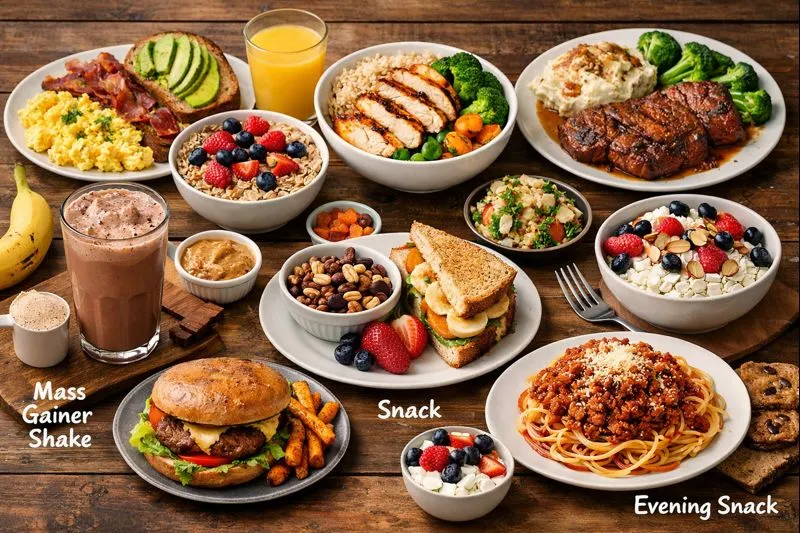
Sample One-Day Weight Gain Meal Plan
A sample meal plan can help demonstrate how to structure your daily intake to support weight gain. The following one-day example is designed to provide a calorie surplus using balanced, nutrient-dense foods. Portion sizes can be adjusted based on individual calorie needs.
Breakfast:
A bowl of oatmeal prepared with whole milk, topped with banana slices, peanut butter, and a handful of nuts. Serve with two whole eggs for added protein and healthy fats.
Mid-Morning Snack:
Greek yogurt with honey and granola, or a smoothie made with milk, fruit, and nut butter for easy calorie intake.
Lunch:
Grilled chicken or tofu with steamed rice, roasted vegetables, and olive oil drizzled on top. Include a side of avocado for additional healthy fats.
Afternoon Snack:
A peanut butter sandwich on whole-grain bread or a handful of trail mix with dried fruits and seeds.
Dinner:
Salmon or lean beef served with potatoes or pasta, along with vegetables sautéed in olive oil.
Optional Evening Snack:
Cottage cheese, yogurt, or a glass of milk with nuts before bed to increase total daily calories.
This sample plan illustrates how balanced meals spread throughout the day can make healthy weight gain achievable and sustainable.
Weight Gain Smoothies and Liquid Calories
For many people, consuming enough calories through solid food alone can be challenging. This is where weight gain smoothies and liquid calories become especially useful. Liquids are easier to consume, digest faster, and allow you to increase calorie intake without feeling overly full.
A well-balanced weight gain smoothie typically includes a protein source, carbohydrates, and healthy fats. Ingredients such as milk or plant-based milk, Greek yogurt, oats, bananas, nut butters, seeds, and protein powder can easily create a smoothie containing 400–700 calories or more. These smoothies are ideal as snacks, post-workout meals, or additions to an already balanced meal plan.
Liquid calories should complement—not replace—whole foods. While smoothies are convenient, solid foods provide fiber and chewing stimulation that support digestion and satiety. Using smoothies strategically helps you meet calorie targets on busy days or when appetite is low.
Timing also matters. Drinking smoothies between meals or after workouts can prevent them from interfering with appetite at main meals. When used consistently, weight gain smoothies can significantly simplify the process of maintaining a calorie surplus and help accelerate healthy weight gain without compromising nutrition.
Common Mistakes That Prevent Weight Gain
Many people struggle to gain weight not because of genetics, but due to avoidable mistakes in their approach. One of the most common errors is overestimating calorie intake. Without tracking meals, it’s easy to assume you’re eating enough when you’re actually falling short of a calorie surplus.
Another frequent mistake is relying too heavily on junk food. While processed foods may be high in calories, they are often low in essential nutrients, which can lead to poor digestion, low energy, and unhealthy fat gain. Sustainable weight gain requires nutrient-dense foods that support muscle growth and overall health.
Skipping meals or eating inconsistently is another major barrier. Long gaps between meals make it difficult to reach daily calorie targets and can suppress appetite over time. Consistency is key—regular meals and snacks help maintain a steady intake of energy and nutrients.
Some individuals also neglect protein intake, focusing only on calories. Without adequate protein, weight gain is more likely to come from fat rather than lean muscle. Additionally, ignoring strength training can limit results, as resistance exercise signals the body to use extra calories for muscle growth.
Avoiding these common mistakes can significantly improve the effectiveness of your weight gain meal plan.
Frequently Asked Questions
How long does it take to gain weight?
Healthy weight gain is a gradual process. Most people can expect to gain around 0.5–1 pound per week when following a consistent calorie surplus and balanced meal plan. Noticeable changes typically occur within 4–6 weeks.
Can I gain weight without exercising?
Yes, weight gain is possible without exercise by eating more calories than you burn. However, strength training helps ensure the added weight comes from muscle rather than excess fat and improves overall body composition.
What if I have a fast metabolism?
People with fast metabolisms often need a larger calorie surplus and more frequent meals. Adding calorie-dense foods and liquid calories, such as smoothies, can make it easier to meet daily needs.
Is it okay to eat before bed?
Yes. A light, protein-rich snack before bed can help increase total calorie intake and support muscle recovery without negatively affecting health.
Do I need supplements to gain weight?
Supplements are not required. Whole foods can provide all the calories and nutrients needed for weight gain. Protein powders or mass gainers are optional tools for convenience, not necessities.
Conclusion
Gaining weight in a healthy and sustainable way requires more than simply eating more food. A well-designed weight gain meal plan focuses on creating a consistent calorie surplus while prioritizing nutrient-dense foods that support muscle growth, energy levels, and overall health. By understanding your calorie needs, balancing macronutrients, and choosing the right foods, you can achieve steady progress without relying on unhealthy shortcuts.
Consistency is the most important factor in long-term success. Eating regular meals, incorporating calorie-dense snacks and smoothies, and tracking your intake can help ensure you stay on course. Equally important is patience—healthy weight gain takes time, and small, steady improvements lead to lasting results.
Remember that every body is different. Adjust portion sizes, meal frequency, and food choices based on how your body responds. Pairing your meal plan with adequate sleep, proper hydration, and strength training can further enhance results and improve body composition.
If you’ve struggled with weight gain in the past, this guide provides a clear and practical roadmap to help you move forward with confidence. With the right approach, gaining weight can become a manageable and rewarding process that supports both your physical health and overall well-being.

William is a passionate wordsmith who loves capturing the essence of life, love, and inspiration through quotes. With a keen eye for meaningful expressions, he curates and crafts words that resonate with readers across the globe. At Quoteblom.com, William’s goal is to bring wisdom, motivation, and a touch of positivity to every visitor, one quote at a time.