The Toyota Tacoma has earned a reputation as one of the most reliable and versatile mid-size pickup trucks on the market. Whether you’re tackling off-road adventures, hauling gear for work, or towing your weekend toys, the Tacoma’s hauling capacity makes it an ideal choice for a wide range of drivers.
With its strong performance, various engine options, and durable build, the Tacoma is designed to handle both light and heavy loads with ease.
In this article, we’ll break down the Tacoma’s towing and payload capacities, explore its engine options, and highlight the features that make it a standout for hauling. Whether you’re considering a new Tacoma or already own one, understanding the truck’s full hauling potential will help you make the most of its capabilities. Let’s dive into the details of how much weight the Toyota Tacoma can handle, and why it’s a top contender in its class.
Understanding Hauling Capacity
Before diving into specific figures, it’s important to understand the two main aspects of hauling capacity: towing capacity and payload capacity. These terms are often used interchangeably but refer to different things, and knowing the difference is crucial for safely utilizing your vehicle’s full potential.
- Towing Capacity refers to the maximum weight your truck can safely pull behind it, typically with a trailer or caravan. This is influenced by factors such as engine power, drivetrain, and the truck’s suspension. Towing capacity is usually the first consideration for truck owners who frequently tow heavy loads.
- Payload Capacity is the maximum weight your truck can carry in its bed or within the cabin. This includes tools, equipment, or anything else you load directly onto the truck. Unlike towing, payload capacity doesn’t involve a trailer but relies on the truck’s suspension and chassis to handle the weight.
The Toyota Tacoma excels in both categories, especially when it comes to towing. With the right configuration, it offers impressive towing numbers, while its bed and cabin can accommodate substantial payloads. In the next sections, we’ll explore how the different configurations of the Tacoma impact these numbers and why it’s an ideal truck for heavy lifting.
Tacoma Hauling Weight Specifications
The Toyota Tacoma’s hauling weight capabilities vary depending on the truck’s configuration, including engine type, drivetrain, and trim level. Let’s break down the towing capacity and payload capacity for a better understanding of what the Tacoma can handle.
- Towing Capacity
The Tacoma offers two main engine options: the 2.7L I4 and the 3.5L V6.
- 2.7L I4: This engine provides a solid towing capacity of up to 3,500 lbs when properly equipped with the Tow Package. While it’s ideal for lighter trailers and recreational towing, it’s less powerful than the V6.
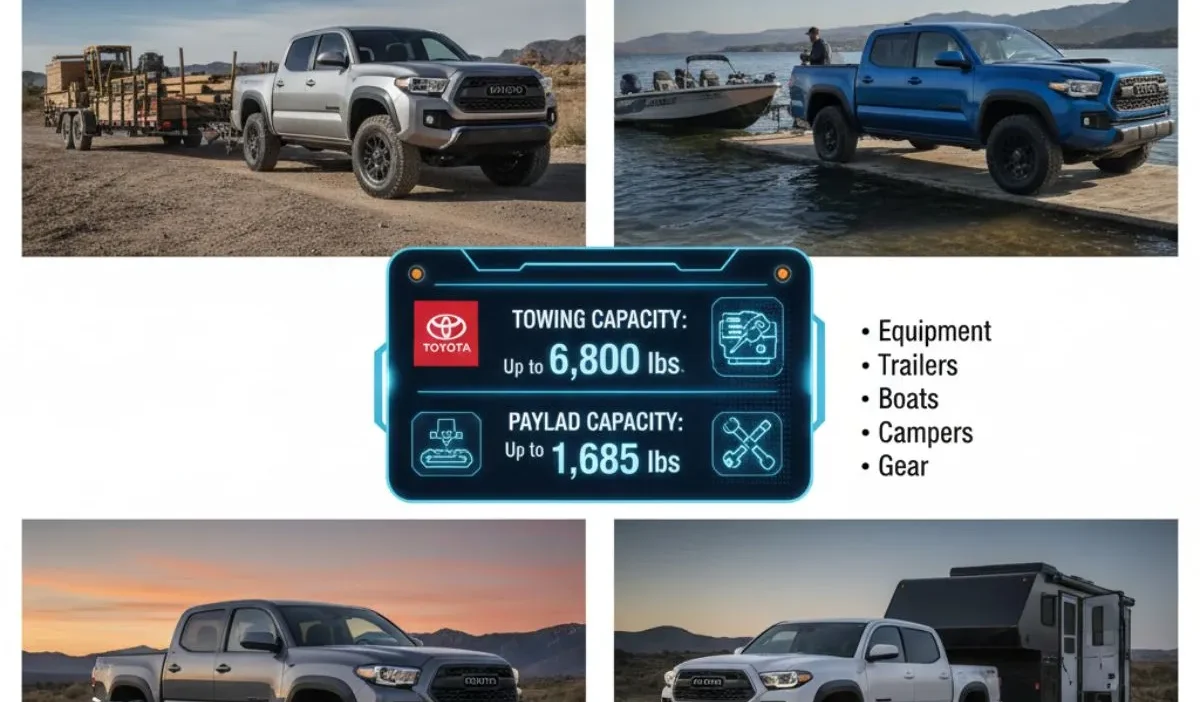
- 3.5L V6: For those needing more muscle, the V6 engine can tow up to an impressive 6,800 lbs with the appropriate towing features. This is perfect for hauling larger trailers, boats, or RVs.
- 2.7L I4: This engine provides a solid towing capacity of up to 3,500 lbs when properly equipped with the Tow Package. While it’s ideal for lighter trailers and recreational towing, it’s less powerful than the V6.
- Payload Capacity
The Tacoma’s payload capacity depends on the bed length and the truck’s configuration. On average, the Tacoma can carry a payload of around 1,440 lbs in its bed. However, this can vary slightly based on trim and the specific options selected.
Whether you’re hauling heavy tools for work or towing your camper for a weekend getaway, the Tacoma offers a solid balance between towing power and payload capacity, making it a versatile choice for both personal and professional needs.
Tacoma Engine & Performance Options
The Toyota Tacoma’s engine options play a significant role in its towing and payload capacity. Let’s take a closer look at the two available engines and how they influence the truck’s overall hauling performance.
- 2.7L I4 Engine
The 2.7L I4 engine is the standard powertrain for many Tacoma models, delivering a modest 159 horsepower and 180 lb-ft of torque. While it’s not as powerful as the V6, it offers an efficient and cost-effective option for drivers who don’t need heavy-duty towing. This engine is capable of towing up to 3,500 lbs and is ideal for lighter loads, city driving, and fuel efficiency. - 3.5L V6 Engine
The more powerful 3.5L V6 engine provides a significant performance boost with 278 horsepower and 265 lb-ft of torque. With this engine, the Tacoma can tow up to 6,800 lbs, making it a great choice for drivers who need a more robust towing and hauling capability. The V6 engine is especially useful when hauling larger trailers, boats, or camping gear. Additionally, it provides more power for off-roading adventures, which is a key selling point for many Tacoma owners.
Both engines come with either a six-speed manual transmission or a six-speed automatic, and the choice between 2WD and 4WD further affects performance and towing capacity.
Towing & Hauling Features of the Tacoma
The Toyota Tacoma is equipped with a variety of towing and hauling features that enhance its performance, making it an excellent choice for anyone who frequently hauls heavy loads. These features ensure not only efficiency but also safety and ease of use when towing or carrying substantial weight.
- Trailer Sway Control
One of the key safety features for towing is Trailer Sway Control. This system helps keep your trailer steady by applying brake force to individual wheels if it detects any swaying or instability. It’s especially useful when towing in windy conditions or on winding roads, providing an added layer of security when hauling large loads. - Towing Package
The Tacoma comes with an available Towing Package that includes a tow hitch, wiring harness, and a trailer brake controller. This package ensures your truck is fully equipped to handle a trailer, and the brake controller helps manage braking force for smoother towing, especially with heavier loads. - Integrated Brake Controller
The brake controller is particularly beneficial for towing larger loads. It synchronizes the truck’s braking system with the trailer’s, improving overall braking performance and reducing strain on the truck’s brake system, which can extend the lifespan of both.
These features are designed to make towing safer and more efficient, whether you’re pulling a small utility trailer or a large recreational vehicle.
Comparison with Other Pickup Trucks
When considering a pickup truck for hauling, it’s important to compare the Toyota Tacoma with its competitors to see how it stacks up in terms of hauling capacity, performance, and value. Let’s take a look at how the Tacoma compares to other popular mid-size trucks in the market, like the Ford Ranger, Chevy Colorado, and Nissan Frontier.
- Ford Ranger
The Ford Ranger offers a towing capacity of up to 7,500 lbs with its 2.3L EcoBoost engine, which is higher than the Tacoma’s V6 offering. However, the Ranger’s payload capacity typically falls in the 1,500 lbs range, which is similar to the Tacoma. While the Ranger excels in towing, the Tacoma shines in off-road capability thanks to its TRD Pro model, designed for rugged terrains. - Chevy Colorado
The Chevy Colorado with its 3.6L V6 engine provides a maximum towing capacity of 7,000 lbs, which is comparable to the Tacoma’s V6. The Colorado also offers a diesel engine option, which delivers superior towing power and better fuel efficiency for those who need to haul heavy loads frequently. However, the Tacoma offers better resale value and stronger off-road capabilities with the TRD Off-Road and TRD Pro trims. - Nissan Frontier
The Nissan Frontier is a budget-friendly option with a towing capacity of up to 6,720 lbs. While it is slightly behind the Tacoma in towing power, it is a solid choice for light-duty hauling. However, the Tacoma outperforms the Frontier in overall ride quality, comfort, and available features.
Overall, while each truck has its strengths, the Toyota Tacoma stands out for its reliability, off-road prowess, and well-rounded towing and hauling capabilities.
Real-World Considerations
While the numbers on paper are impressive, it’s equally important to consider how the Toyota Tacoma performs in real-world towing and hauling scenarios. Understanding how the truck handles weight on the road, its driving dynamics, and its fuel efficiency when towing is key to assessing whether it meets your needs.
- Driving Performance While Hauling
The Tacoma is known for its sturdy suspension system, which helps maintain stability when towing or carrying heavy loads. With the V6 engine, the truck handles heavier trailers with ease, while the I4 engine performs well for lighter loads. However, it’s important to remember that the ride may feel a bit firmer when towing larger loads. The TRD Off-Road model, in particular, excels in rough terrain, providing additional stability when hauling on uneven surfaces. - Fuel Efficiency When Towing/Hauling
Towing or hauling can significantly impact the truck’s fuel economy. The Tacoma’s fuel efficiency typically ranges between 18-22 MPG depending on the engine, but towing can reduce this. When towing at max capacity, you may experience a noticeable drop in fuel efficiency, with averages dropping to around 15-17 MPG. The 2.7L I4 engine tends to be more fuel-efficient for lighter loads, while the 3.5L V6 offers more power at the cost of some efficiency. - Safety Factors
Towing and hauling heavy loads can put extra strain on the vehicle’s braking and suspension systems. Ensuring that your load is properly distributed, and using features like Trailer Sway Control and the integrated brake controller will help maintain safety on the road. Always ensure your load doesn’t exceed the Tacoma’s weight limits to avoid wear and tear on the vehicle.
Best Practices for Hauling with a Tacoma
To get the most out of your Toyota Tacoma’s towing and hauling capacity, it’s important to follow some best practices. Proper load management and maintenance can not only improve performance but also extend the lifespan of your truck. Here are a few key tips to ensure safe and efficient hauling.
- Proper Weight Distribution
When loading the bed or towing a trailer, always ensure that the weight is distributed evenly. For trailers, this means placing 60% of the weight in the front half of the trailer to prevent swaying and ensure balanced handling. Uneven weight distribution can also strain the suspension and reduce braking efficiency, making it harder to control your vehicle, especially on hills or rough terrain. - Never Exceed the Maximum Capacity
One of the most crucial aspects of safe towing and hauling is respecting the vehicle’s limits. While it may be tempting to push the Tacoma to its max, exceeding either the towing or payload capacity can damage the engine, transmission, and suspension. Always check the owner’s manual for the specific weight limits for your truck’s configuration. - Routine Maintenance for Towing
Regularly check your Tacoma’s brakes, tires, and suspension to ensure they’re in top condition for hauling. Towing and heavy loads place additional strain on these systems, so keeping them in good working order is essential. Consider upgrading your suspension with tow packages or airbags to enhance stability.
By following these guidelines, you’ll ensure that your Tacoma can haul safely and effectively, whether you’re using it for work or play.
The Cost of Owning and Hauling with a Tacoma
While the Toyota Tacoma offers impressive towing and hauling capabilities, it’s also important to consider the total cost of ownership, especially if you plan on regularly using it for hauling heavy loads. From the initial price of the truck to long-term maintenance costs, understanding the financial commitment is essential for prospective buyers.
- Price of the Truck
The cost of a new Toyota Tacoma varies based on trim level and configuration. The base model (SR) starts at around $28,000, while higher trims like the TRD Off-Road or TRD Pro can push the price to over $40,000. If you’re looking for a truck primarily for towing and hauling, you may want to opt for trims with enhanced towing packages, which could add additional costs. - Maintenance Costs
Owning a vehicle that’s regularly used for towing or hauling can lead to higher maintenance costs over time. The brake system and suspension components are typically the first to show signs of wear when hauling heavy loads. Expect to spend more on brake replacements, tire rotations, and suspension maintenance compared to lighter-use vehicles. However, Toyota’s reputation for reliability means that these costs tend to be lower than some competitors in the long run. - Accessories and Add-Ons
For enhanced hauling capabilities, you may also invest in various accessories such as tow hitches, bed liners, cargo management systems, and trailer brake controllers. These accessories can range from a few hundred to several thousand dollars, depending on your needs.
FAQs
- What’s the difference between towing and payload capacity?
Towing capacity refers to the maximum weight your truck can safely pull behind it, such as a trailer or camper. Payload capacity, on the other hand, is the maximum weight the truck can carry in its bed or cabin. It includes items like tools, equipment, or any other cargo you load directly onto the truck. - How do I know if my load exceeds Tacoma’s hauling limits?
To ensure you’re not exceeding the truck’s limits, always refer to the owner’s manual for exact weight capacities. You can also use a truck scale to weigh your vehicle with and without the load to ensure you’re within safe limits. - What kind of trailer can I tow with a Tacoma?
With the 3.5L V6 engine, the Tacoma can tow up to 6,800 lbs, which is suitable for many types of trailers, including boat trailers, campers, and utility trailers. If you need to tow something heavier, consider a truck with a higher towing capacity. - Does the towing capacity change with different trim levels?
Yes, the towing capacity of the Tacoma can vary based on its trim and configuration. For example, the TRD Pro trim with the V6 engine offers higher towing limits compared to the base SR trim. - Can I increase the Tacoma’s towing capacity?
While the maximum towing capacity is determined by the engine and drivetrain, you can enhance towing performance with aftermarket accessories like sway control systems, upgraded suspension, and brake controllers.
Conclusion
The Toyota Tacoma stands out as one of the best mid-size trucks for those who need a reliable vehicle for both towing and hauling. Whether you’re hauling tools to a job site, towing a trailer for a weekend getaway, or carrying heavy gear for an off-road adventure, the Tacoma delivers exceptional performance across the board. With its versatile engine options, impressive towing capacity of up to 6,800 lbs, and solid payload capabilities, it can handle a wide range of tasks without breaking a sweat.
However, as with any vehicle, understanding your truck’s limits and maintaining it properly are essential for ensuring long-term reliability and safety. By adhering to weight limits, practicing proper load distribution, and keeping up with routine maintenance, you’ll get the most out of your Tacoma’s hauling potential.
When comparing the Tacoma to other trucks in its class, its blend of rugged off-road capability, towing features, and overall durability make it a standout choice. Whether you’re a contractor, weekend warrior, or someone who simply enjoys outdoor activities, the Tacoma’s towing and hauling power will meet your needs.
In the end, the Toyota Tacoma’s hauling weight specifications, combined with its dependability and performance, make it an excellent choice for anyone looking to take on heavy loads with ease and confidence.

Joseph is a passionate writer and quote curator at QuoteBlom.com, dedicated to bringing inspiration, wisdom, and a touch of motivation to every reader. With a keen eye for meaningful words and life-changing insights, Joseph carefully selects and shares quotes that uplift, empower, and spark thoughtful reflection. Whether you’re looking for a daily dose of positivity, love, or life advice, Joseph’s writings are designed to resonate with readers from all walks of life, making each visit to QuoteBlom.com a journey of inspiration.