
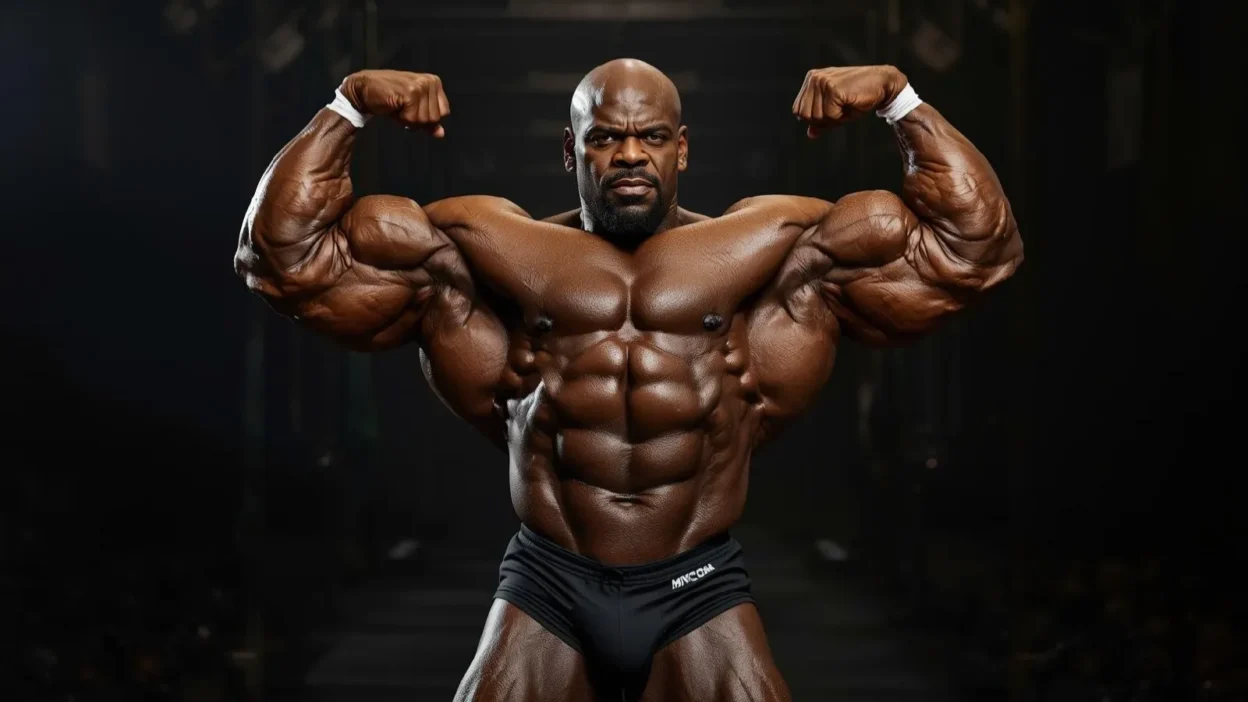
Ronnie Coleman’s weight has become one of the most talked-about topics in bodybuilding history and for good reason. As an eight-time Mr. Olympia champion, Coleman didn’t just dominate his era; he redefined what was physically possible on a bodybuilding stage. Fans still search for Ronnie Coleman weight because his size seemed almost unreal: massive, dense muscle combined with razor-sharp conditioning that few have ever matched.
At his peak, Ronnie carried bodyweight numbers that most bodybuilders could barely handle in the off-seasonyet he stepped on stage lean, symmetrical, and overwhelmingly powerful. His ability to maintain extreme muscle mass while staying shredded set a new standard and helped usher in the era of mass monsters. Understanding how much Ronnie Coleman weighed, both in competition and in the off-season, reveals more than just numbersit explains why his physique is still considered the greatest of all time.
Ronnie Coleman’s Height, Weight, and Physical Structure
To truly understand Ronnie Coleman’s weight, it’s important to look at his overall physical structure. Ronnie stood 5 feet 11 inches tall, a height that placed him in a near-perfect range for elite bodybuilding. He was tall enough to carry extreme muscle mass, yet compact enough to maintain thickness, density, and visual impact on stage. This balance played a major role in how heavy he could get without sacrificing aesthetics.
During competition, Ronnie Coleman’s weight typically ranged between 285 and 300 pounds, depending on the year and his conditioning strategy. What made these numbers extraordinary wasn’t just the scale weight it was how lean he appeared at that size. Unlike many bodybuilders who lose shape as weight increases, Ronnie maintained full muscle bellies, deep separations, and granite-like density.
In the off-season, his bodyweight climbed even higher, often reaching 315 to over 330 pounds. At that size, his physique was built to support brutally heavy training sessions, including legendary squats and deadlifts well above 800 pounds. His wide clavicles, thick joints, and dense muscle insertions allowed him to carry this mass better than almost anyone in bodybuilding history.
Ronnie Coleman’s height-to-weight ratio is one of the main reasons his physique remains unmatched. He didn’t just look big he looked overwhelmingly powerful, structured for maximum muscle without losing proportion.
Ronnie Coleman’s Competition Weight During His Prime
Ronnie Coleman’s competition weight reached legendary status during his prime years, particularly from 1998 to 2005, when he dominated the Mr. Olympia stage. Throughout this period, his on-stage weight consistently fell between 285 and 300 pounds, an almost unheard-of level of mass combined with extreme conditioning. What separated Ronnie from his competitors wasn’t just how much he weighed, but how complete his physique looked at that size.
Early in his Olympia reign, Ronnie appeared slightly lighter but razor-sharp, prioritizing conditioning and symmetry. As his career progressed, he brought increasingly thicker muscle while maintaining deep striations, especially in his back, legs, and glutes. By the early 2000s, he was stepping on stage close to the 300-pound mark while fully shredded, setting a new benchmark for competitive bodybuilding.
Unlike many athletes who fluctuate significantly from year to year, Ronnie’s contest weight remained remarkably stable during his peak. This consistency allowed him to refine posing, muscle maturity, and overall presentation rather than constantly adjusting for large weight changes. Judges rewarded this balance, as his physique displayed both overwhelming size and elite-level polish.
Ronnie Coleman’s prime competition weight represents a turning point in bodybuilding history. It proved that extreme muscle mass and world-class conditioning were no longer mutually exclusive and that combination is why his Olympia-winning physiques are still studied and admired today.
Ronnie Coleman’s Off-Season Weight and Bulking Philosophy
While Ronnie Coleman’s competition weight was already extreme, his off-season weight revealed just how far he pushed his body to build championship-level muscle. During non-competition periods, Ronnie routinely weighed between 315 and 330 pounds, with some reports suggesting he occasionally climbed even higher. This extra bodyweight wasn’t accidental it was a deliberate part of his muscle-building strategy.
Ronnie believed the off-season was the time to grow aggressively. Carrying more weight allowed him to fuel brutally intense workouts and recover from the massive training loads he imposed on his body. His goal wasn’t to stay lean year-round, but to add dense, functional muscle that would remain after cutting down for the stage. Unlike sloppy bulking approaches, his weight gain was tightly controlled, with the majority of the increase coming from muscle rather than excess fat.
This off-season mass also supported his legendary strength. Squatting and deadlifting over 800 pounds required not only neurological power but structural thickness, strong joints, connective tissue, and overall body mass. The heavier he became, the more stable and powerful he felt under the bar.
Ronnie Coleman’s off-season weight played a crucial role in shaping his iconic physique. It allowed him to arrive at contest prep with a surplus of muscle, ensuring that even after weeks of dieting, he stepped on stage massive, full, and dominant.
How Ronnie Coleman’s Training Style Drove His Massive Weight
Ronnie Coleman’s weight was a direct result of his brutally intense training style. Unlike many bodybuilders who relied primarily on moderate weights and high repetitions, Ronnie trained with a powerlifting-meets-bodybuilding approach. He regularly performed heavy compound lifts/squats, deadlifts, bench presses, and rows using loads that most strength athletes would consider extreme.
These heavy lifts placed enormous mechanical stress on his muscles, stimulating exceptional growth. Squatting and deadlifting over 800 pounds required not only immense strength but also significant bodyweight to support the load. As Ronnie grew stronger, his body adapted by adding more muscle mass, naturally driving his weight higher over time.
Despite the heavy weights, Ronnie still trained with high volume. He often performed multiple working sets after his heaviest lifts, ensuring both strength and hypertrophy were maximized. This combination allowed him to build dense, mature muscle rather than soft or inflated size.
Another key factor was consistency. Ronnie trained year-round with relentless intensity, rarely backing off even during contest prep. While this approach contributed to his success, it also explains how he maintained such high bodyweight even while dieting for competitions.
Ronnie Coleman’s training philosophy proved that size must be earned through strength. His ability to lift unprecedented weights while maintaining bodybuilding form is a major reason his bodyweight climbed to historic levels and why his physique still stands as the ultimate example of mass and power combined.
Ronnie Coleman’s Diet and Calorie Intake at Peak Bodyweight
Maintaining Ronnie Coleman’s weight required an extraordinary level of nutritional discipline. At over 300 pounds in the off-season and close to that on stage, his body demanded a massive daily caloric intake just to recover and function. While exact numbers varied, Ronnie was widely known to consume 5,000 to 6,000+ calories per day, with intake increasing during intense training phases.
Protein formed the foundation of his diet. Multiple high-protein meals throughout the day supplied the amino acids needed to repair muscle damaged by heavy training. Carbohydrates played an equally important role, providing the fuel necessary for brutal workouts and supporting muscle fullness. Healthy fats rounded out his nutrition, helping regulate hormones and maintain overall health.
Unlike many athletes who relied on junk food to bulk up, Ronnie followed a relatively clean eating approach. His meals were consistent, predictable, and structured, allowing him to control weight gain while maximizing muscle growth. This approach ensured that most of the weight he added in the off-season was functional muscle rather than excess fat.
Nutrition timing also mattered. Pre- and post-workout meals helped him sustain strength and recover quickly, enabling him to train with high intensity day after day. Ronnie Coleman’s diet wasn’t flashy it was relentless, disciplined, and perfectly aligned with the extreme bodyweight and strength demands of a champion bodybuilder.
Ronnie Coleman’s Weight Compared to Other Bodybuilding Legends
When comparing Ronnie Coleman’s weight to other legendary bodybuilders, it becomes clear just how exceptional his physique truly was. Prior to Ronnie’s reign, mass monsters like Dorian Yates pushed the limits of size, typically competing in the mid- to high-260-pound range. While Dorian was incredibly dense, Ronnie surpassed him by bringing significantly more muscle while maintaining similar or better conditioning.
During Ronnie’s era, Jay Cutler emerged as his greatest rival. Jay often competed around 260–275 pounds, relying on wide structure and fullness to challenge Ronnie’s dominance. Despite Jay’s impressive size, Ronnie consistently outweighed him on stage while appearing harder and more detailed, particularly from the back.
Compared to modern bodybuilders, Ronnie Coleman’s weight still holds up remarkably well. Although some current competitors may reach similar or slightly higher scale weights, very few have matched Ronnie’s ability to stay lean, symmetrical, and explosive at such mass. His physique didn’t rely on visual trickshis size was undeniable from every angle.
Ronnie Coleman’s combination of near-300-pound stage weight, elite conditioning, and unmatched strength places him in a category of his own. While bodybuilding continues to evolve, his physique remains the benchmark against which all extreme mass is measured, proving that his weight was not just large it was historically significant.
The Health Impact of Ronnie Coleman’s Extreme Bodyweight
Carrying Ronnie Coleman’s weight came with a significant physical cost. Maintaining over 300 pounds in the off-season combined with lifting maximal weights year after year placed enormous stress on his joints, spine, and connective tissue. While his muscles adapted to the workload, his skeletal system endured constant compression, particularly in the lower back and hips.
Over time, this strain led to multiple serious injuries. Ronnie underwent several back and hip surgeries, many of which were directly linked to the combination of extreme bodyweight and heavy compound lifting. The repeated axial loading from squats and deadlifts, especially at such high body mass, gradually wore down his spinal structure.
Despite these challenges, Ronnie continued to train and compete at the highest level, often pushing through pain that would sideline most athletes. While this relentless mindset contributed to his legendary success, it also accelerated long-term mobility issues later in life. Today, his reduced mobility serves as a sobering reminder of the physical toll elite bodybuilding can take.
Ronnie Coleman’s experience highlights an important truth: extreme bodyweight is not without consequences. His success came from extraordinary genetics, discipline, and pain tolerance factors that most individuals do not possess. While his physique remains iconic, his health journey underscores the importance of balancing ambition with longevity in any strength-focused pursuit.
Lessons Bodybuilders and Lifters Can Learn From Ronnie Coleman’s Weight
Ronnie Coleman’s weight offers valuable lessons for anyone pursuing muscle growth and strength. The most important takeaway is that size must be earned through performance, not just calories. Ronnie didn’t simply eat his way to 300 pounds, his bodyweight increased alongside dramatic gains in strength. His legendary lifts forced his body to adapt by building dense, functional muscle.
Another lesson is the role of genetics and recovery. Ronnie possessed exceptional muscle structure, joint strength, and recovery capacity, allowing him to carry extreme weight that would be unsustainable for most people. This highlights the danger of imitation without context. Chasing Ronnie-level bodyweight without his genetic advantages can lead to injury rather than progress.
His career also demonstrates the trade-off between maximum mass and long-term health. Ronnie prioritized winning above all else, accepting the physical consequences that came with pushing his body to the limit. While this mindset produced historic results, it also emphasizes the importance of personal goals. Not every lifter needs to be as heavy or train as brutally to build an impressive physique.
Finally, Ronnie Coleman’s journey reinforces the value of consistency and discipline. His weight, strength, and success were the result of years of relentless effort, structured training, and nutritional precision. For most lifters, the real lesson isn’t to chase extreme bodyweight but to pursue sustainable progress while respecting the limits of their own bodies.
Common Myths and Misconceptions About Ronnie Coleman’s Weight
Ronnie Coleman’s legendary size has led to many myths about how much he actually weighed and how he achieved his physique. One of the most common misconceptions is that Ronnie competed well over 300 pounds on stage. In reality, while he approached that number at times, his contest weight typically ranged between 285 and 300 pounds, depending on conditioning and the specific Olympia year.
Another myth is that Ronnie’s weight was simply the result of eating massive amounts of food. While his calorie intake was undeniably high, his bodyweight was driven primarily by extraordinary strength levels and training intensity. Without lifting record-breaking weights, excess calories alone would not have produced the dense muscle mass he carried.
Some believe Ronnie’s physique was purely genetic and unattainable through hard work. While genetics played a major role, this belief downplays the relentless discipline, consistency, and pain tolerance required to maintain his weight and conditioning. Genetics opened the door but effort kept him at the top.
Finally, there’s the misconception that Ronnie’s approach is ideal for all lifters. His extreme bodyweight and training style were tailored to elite competition and came with serious health costs. For most individuals, chasing similar numbers on the scale is neither necessary nor productive.
Understanding these myths provides clarity: Ronnie Coleman’s weight wasn’t magic or reckless it was the result of a rare combination of genetics, strength, and uncompromising dedication.
Frequently Asked Questions About Ronnie Coleman’s Weight
How much did Ronnie Coleman weigh on stage?
Ronnie Coleman typically weighed between 285 and 300 pounds during competition. Despite this extreme bodyweight, he appeared exceptionally lean, which is why his size looked even more impressive under stage lighting.
What was Ronnie Coleman’s heaviest weight ever?
In the off-season, Ronnie’s weight often reached 315 to over 330 pounds. This heavier bodyweight supported his intense training and helped him build the dense muscle mass that defined his physique.
How tall is Ronnie Coleman?
Ronnie Coleman stands 5 feet 11 inches tall. This height allowed him to carry massive muscle while maintaining balance, symmetry, and proportion.
Was Ronnie Coleman the heaviest Mr. Olympia winner?
While not always the heaviest by scale weight alone, Ronnie is widely considered the largest Mr. Olympia in terms of lean, stage-ready muscle mass. His combination of size and conditioning remains unmatched.
How did Ronnie Coleman stay lean at such a high weight?
Ronnie relied on extreme training intensity, strict nutrition, and exceptional genetics. His heavy compound lifts helped preserve muscle while dieting, allowing him to maintain fullness and conditioning.
Could Ronnie Coleman compete at the same weight today?
Yes, his size would still be competitive today. Few modern bodybuilders can match Ronnie’s blend of mass, density, and conditioning at nearly 300 pounds.
Conclusion: Why Ronnie Coleman’s Weight Still Defines Bodybuilding Greatness
Ronnie Coleman’s weight represents far more than a number on a scale it symbolizes the absolute peak of bodybuilding achievement. Competing at nearly 300 pounds while fully conditioned, Ronnie redefined what the human body could look like on a professional stage. His ability to combine extreme muscle mass, elite conditioning, and unmatched strength set a standard that remains largely untouched.
Throughout his career, Ronnie used off-season weight strategically, pushing his body beyond conventional limits to build dense, functional muscle. That mass, earned through brutally heavy training and disciplined nutrition, translated into historic dominance, including eight consecutive Mr. Olympia titles. His physique wasn’t just big it was complete, balanced, and overwhelming from every angle.
However, his journey also serves as a reminder of the physical cost that comes with chasing maximum size. Ronnie’s later health challenges highlight the sacrifices required to reach such extraordinary heights. For most lifters, his story is best viewed as inspiration rather than a blueprint to copy.
Decades later, fans still analyze Ronnie Coleman’s weight because it represents a rare intersection of genetics, work ethic, and fearlessness. His legacy proves that true greatness in bodybuilding isn’t about being heavy it’s about being dominant, disciplined, and unforgettable.

Joseph is a passionate writer and quote curator at QuoteBlom.com, dedicated to bringing inspiration, wisdom, and a touch of motivation to every reader. With a keen eye for meaningful words and life-changing insights, Joseph carefully selects and shares quotes that uplift, empower, and spark thoughtful reflection. Whether you’re looking for a daily dose of positivity, love, or life advice, Joseph’s writings are designed to resonate with readers from all walks of life, making each visit to QuoteBlom.com a journey of inspiration.