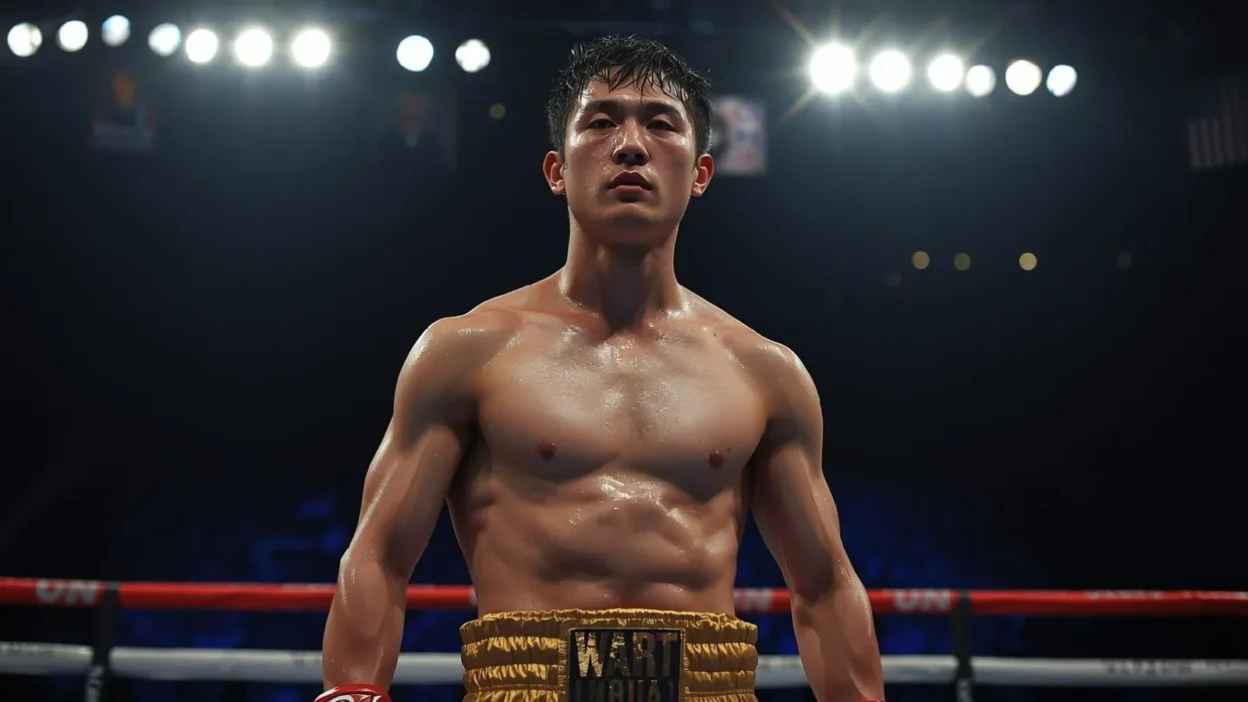
Naoya Inoue’s weight has become one of the most talked-about topics in modern boxing, and for good reason. Known worldwide as “The Monster,” Inoue has dominated multiple weight classes while maintaining devastating knockout power against naturally bigger opponents. In a sport where size and mass often determine success, Inoue has consistently proven that elite technique, timing, and disciplined weight management can outweigh physical disadvantages.
Currently competing at super bantamweight (122 lbs), Naoya Inoue is a rare example of a fighter whose power has translated seamlessly as he moved up in weight. Fans and analysts alike frequently ask: what is Naoya Inoue’s actual weight, how much does he cut, and how heavy is he on fight night? Understanding these details helps explain why Inoue remains one of the most feared pound-for-pound boxers in the world.
This article breaks down Naoya Inoue’s weight, weight classes, and how his size has fueled not limited his dominance.
Naoya Inoue’s Physical Profile
Naoya Inoue’s physical profile plays a crucial role in how effectively he competes across multiple weight classes. While he is not considered large by boxing standards, his body composition and proportions are ideally suited for generating explosive power. Inoue stands approximately 5 feet 5 inches (165 cm) tall with a reach of around 67 inches (171 cm), measurements that are fairly average for the lower weight divisions but slightly undersized at super bantamweight.
What separates Inoue from many fighters at similar weights is his compact, muscular frame. He carries dense muscle, particularly through his legs, core, and shoulders, which allows him to generate exceptional torque when punching. Rather than relying on long levers or sheer mass, Inoue’s power comes from efficient biomechanics, balance, and perfect weight transfer.
Another important aspect of Naoya Inoue’s weight profile is his natural walking weight. Unlike fighters who balloon far above their division limit between fights, Inoue is known for staying relatively close to his fighting weight year-round. This approach reduces the strain of extreme weight cuts and helps preserve speed, stamina, and durability on fight night.
His disciplined approach to strength training and conditioning ensures that any added weight as he moves up divisions is functional, not cosmetic. As a result, Inoue has been able to increase his fighting weight without sacrificing the speed and explosiveness that define his style, making his physical profile one of the most efficient in boxing today.
What Is Naoya Inoue’s Current Weight?
Naoya Inoue currently competes in the super bantamweight division, where the official weight limit is 122 pounds (55.3 kg). This is the highest weight class of his professional career so far, and it has proven to be one of his most dominant. At the official weigh-ins, Inoue consistently comes in comfortably under or right on the 122-pound limit, showing precise control over his weight management.
While the scale reading at the weigh-in tells part of the story, it does not fully represent Naoya Inoue’s true fighting weight. Like most elite boxers, Inoue rehydrates after the weigh-in, replenishing fluids and glycogen before stepping into the ring. On fight night, his weight is estimated to rise into the 130 to 135-pound range, depending on the length of camp and rehydration strategy.
Despite competing against naturally bigger super bantamweights, Inoue does not appear physically overmatched. His strength, balance, and punch resistance suggest that 122 pounds is close to his optimal division. He remains fast enough to outmaneuver opponents while carrying enough mass to maintain his trademark knockout power.
Importantly, Inoue’s consistency at this weight reflects a long-term strategy rather than a short-term experiment. By settling at super bantamweight, he has avoided drastic weight fluctuations that can drain performance. Instead, his current weight allows him to fight at peak efficiency, combining speed, power, and endurance in a way few fighters at 122 pounds can match.
Naoya Inoue’s Weight Classes Throughout His Career
Naoya Inoue’s rise to pound-for-pound greatness is closely tied to how successfully he has navigated multiple weight classes. He began his professional career at light flyweight (108 lbs), where his speed and sharp punching immediately stood out. Even at this early stage, Inoue showed unusual power for the division, quickly capturing a world title and establishing himself as a fighter destined to move up.
Inoue soon transitioned to super flyweight (115 lbs), a division known for its depth and technical talent. Rather than losing effectiveness, his knockout power actually became more pronounced. The added weight allowed him to sit down on his punches without compromising speed, leading to several highlight-reel stoppages against elite opposition.
The move to bantamweight (118 lbs) marked a turning point in his career. At this weight, Inoue reached peak physical dominance, unifying the division and becoming undisputed champion. His strength, timing, and power overwhelmed larger opponents, reinforcing his reputation as “The Monster.”
Currently, Inoue competes at super bantamweight (122 lbs), the fourth weight class of his career. Despite giving up natural size to some rivals, he has continued to score knockouts and control fights decisively. Each step up in weight has been carefully managed, allowing Inoue to add functional mass while preserving the speed and explosiveness that made him dangerous in the first place.
Weigh-In Weight vs Fight Night Weight
Understanding the difference between weigh-in weight and fight night weight is essential when analyzing Naoya Inoue’s true size advantage or lack of one inside the ring. In professional boxing, fighters officially weigh in roughly 24 hours before the bout. For Inoue, this means hitting the 122-pound super bantamweight limit on the scale, often with little visible strain.
After the weigh-in, Inoue immediately begins the rehydration and refueling process. This includes restoring fluids, electrolytes, and muscle glycogen that were temporarily depleted to make weight. By the time he steps into the ring, his body weight is noticeably higher. Most estimates place Naoya Inoue’s fight night weight between 130 and 135 pounds, though this can vary depending on the length of camp and the specific opponent.
What makes Inoue different from many fighters is the moderation of his weight rebound. Some boxers rely on extreme cuts followed by massive rehydration, gaining 15 to 20 pounds overnight. Inoue’s approach is far more controlled. By staying close to his natural weight year-round, he avoids the sluggishness and stamina issues that often accompany drastic weight swings.
As a result, Inoue may enter the ring lighter than some opponents, but he gains a critical advantage in speed, conditioning, and punch precision. This balance between weigh-in discipline and fight-night efficiency is a key reason his power and performance remain consistent at higher weights.
How Naoya Inoue Maintains Power Across Weight Classes
Naoya Inoue’s ability to maintain devastating power as he moves up in weight is one of the most remarkable aspects of his career. Traditionally, fighters lose knockout effectiveness when facing larger opponents, but Inoue has repeatedly defied this pattern. The key lies in his exceptional strength-to-weight ratio, which allows him to generate force far beyond what his size suggests.
Much of Inoue’s power comes from elite biomechanics and technique. He generates punches from the ground up, using strong legs, explosive hip rotation, and a tightly engaged core. This efficient transfer of energy means very little power is wasted, even when he adds weight. His compact frame also allows him to punch with leverage, creating concussive impact in short, tight combinations.
Speed is another critical factor. Inoue’s hand speed and reaction time remain elite at higher weights, enabling him to land clean shots before opponents can brace or counter. Clean punches, delivered with perfect timing, are far more damaging than heavier but slower blows.
Additionally, Inoue’s weight gains have been functional rather than excessive. He does not chase bulk for appearance; instead, he adds muscle that enhances balance, durability, and punching efficiency. This disciplined approach ensures that his power scales with his weight class, allowing him to stop opponents from light flyweight all the way up to super bantamweight without sacrificing the speed and precision that define his fighting style.
Does Moving Up in Weight Reduce Naoya Inoue’s Knockout Power?
For many fighters, moving up in weight leads to a noticeable drop in knockout power, as opponents become bigger, stronger, and more durable. In Naoya Inoue’s case, however, the opposite has largely been true. His knockout percentages have remained exceptionally high across every division he has competed in, challenging the assumption that power does not carry upward.
One reason Inoue has avoided a decline in stoppages is the quality of his power rather than sheer force. His punches are delivered with pinpoint accuracy, often landing on vulnerable targets such as the chin, temple, or body. As he moved up in weight, the added mass behind his shots only enhanced the damage when those punches landed clean.
Another factor is Inoue’s ability to break opponents down systematically. Instead of relying solely on one-punch knockouts, he uses combinations, body attacks, and sustained pressure to weaken opponents over time. This approach becomes even more effective at higher weights, where accumulated damage plays a larger role in fight outcomes.
Additionally, Inoue’s conditioning has allowed him to maintain power late into fights. Fighters who cut too much weight often fade in later rounds, reducing their knockout threat. Inoue’s controlled weight management ensures that his strength and explosiveness remain consistent from the opening bell to the final rounds.
While competition naturally becomes tougher as divisions increase, Inoue has shown that intelligent weight progression, combined with elite technique, can preserve and even amplify knockout power at higher levels.
Training, Diet, and Weight Management
Naoya Inoue’s success across multiple weight classes is not accidental; it is the result of meticulous training, disciplined nutrition, and intelligent weight management. Rather than relying on drastic weight cuts, Inoue and his team prioritize long-term physical sustainability, ensuring he enters each fight strong, fresh, and explosive.
His training regimen places heavy emphasis on functional strength and conditioning. Instead of excessive hypertrophy, Inoue focuses on core stability, leg drive, and explosive movements that translate directly into punching power and ring mobility. Plyometrics, resistance training, and sport-specific drills help him maintain speed while gradually adding useful muscle as he moves up divisions.
Diet plays an equally important role in controlling Naoya Inoue’s weight. His nutrition plan is designed to keep him close to his fighting weight year-round, minimizing the need for extreme dehydration before weigh-ins. Clean, balanced meals rich in lean protein, complex carbohydrates, and healthy fats support recovery and muscle maintenance without unnecessary mass gain. Hydration is carefully monitored, particularly in the final stages of camp.
When it comes to weight cutting, Inoue follows a minimal-drain philosophy. Any reduction before the weigh-in is strategic and measured, allowing for quick recovery and efficient rehydration. This approach protects stamina, punch resistance, and mental sharpness.
By combining smart training with disciplined nutrition, Inoue has turned weight management into a competitive advantage, enabling him to perform at peak levels regardless of division.
Naoya Inoue vs Other Fighters at Super Bantamweight (122 lbs)
At super bantamweight, Naoya Inoue often faces opponents who appear naturally bigger and longer, yet the physical differences rarely translate into an advantage against him. Many fighters in the 122-pound division have greater height, reach, or overall mass on fight night, but Inoue consistently neutralizes these factors through superior skill and physical efficiency.
In terms of raw size, Inoue is typically shorter and more compact than several top super bantamweights. However, his dense muscle structure and balance allow him to hold his ground in exchanges. He rarely gets pushed back or bullied, even by fighters who rehydrate to significantly heavier weights.
Where Inoue truly separates himself is in speed, timing, and precision. His ability to close distance quickly makes height and reach less relevant. He slips punches with minimal movement and counters immediately, often before opponents can reset. This efficiency reduces the advantage of larger frames and turns openings into decisive moments.
Power is another major differentiator. While some super bantamweights rely on volume or attrition, Inoue’s punches carry fight-ending threat. Opponents must respect his power at all times, which limits their willingness to use size aggressively.
Ultimately, Inoue’s success at 122 pounds shows that size alone does not define dominance. His mastery of distance, controlled weight management, and elite technique allow him to outperform larger fighters and impose his will in one of boxing’s most competitive divisions.
Can Naoya Inoue Move Up Another Weight Class?
As Naoya Inoue continues to dominate at super bantamweight, speculation has grown about whether he could successfully move up yet another division. The most frequently discussed option is featherweight (126 lbs), a class that would present new physical and tactical challenges. On paper, the jump appears modest, but in reality it would place Inoue against significantly larger and stronger opponents.
From a physical standpoint, adding four more pounds would likely push Inoue closer to the upper limits of his natural frame. While his power and technique have translated well so far, featherweights generally carry more mass on fight night, potentially reducing the size advantage Inoue currently holds in speed and explosiveness. Durability against sustained pressure would become a more important factor.
That said, Inoue’s history suggests he would not rush such a move. Each previous weight transition was calculated, allowing time to add functional strength without sacrificing performance. If he were to move to 126 pounds, it would likely follow a similar long-term approach.
Technically, Inoue’s skill set gives him a chance against anyone. His timing, body punching, and ring IQ could offset size disparities, much as they have in past divisions. Whether or not he moves up, the discussion itself highlights how exceptional his weight progression has been and why few fighters in boxing history invite such comparisons.
FAQs About Naoya Inoue’s Weight
What is Naoya Inoue’s current weight?
Naoya Inoue currently competes in the super bantamweight division, where the official weight limit is 122 pounds (55.3 kg). He consistently makes this weight without excessive strain, reflecting his disciplined weight management.
How much does Naoya Inoue weigh on fight night?
Although he weighs in at 122 pounds, Inoue typically rehydrates and enters the ring at an estimated 130 to 135 pounds. This puts him slightly lighter than some opponents but allows him to maintain speed, stamina, and sharpness.
What is Naoya Inoue’s walk-around weight?
Inoue is known for staying close to his fighting weight year-round. His walk-around weight is believed to be only a few pounds above his division limit, helping him avoid extreme weight cuts.
How much weight does Naoya Inoue cut before fights?
Compared to many fighters, Inoue cuts a minimal amount of weight. His approach focuses on small, controlled reductions rather than heavy dehydration, which protects performance and durability.
Is Naoya Inoue small for super bantamweight?
Yes, Inoue is slightly undersized in terms of height and reach at 122 pounds. However, his compact build, strength, and timing more than compensate for any size disadvantage.
Has moving up in weight reduced Inoue’s power?
No. Inoue has maintained an exceptionally high knockout rate across all weight classes, showing that his power translates effectively as he moves up.
Conclusion: Weight as a Weapon, Not a Limitation
Naoya Inoue’s career is a powerful example of how intelligent weight management can become a decisive weapon in boxing rather than a limitation. Across four weight classes, he has shown that success is not determined solely by size, but by how efficiently a fighter uses their body. From light flyweight to super bantamweight, Inoue’s approach to weight has been calculated, disciplined, and sustainable.
Instead of relying on extreme cuts or size advantages, Inoue has prioritized balance, speed, and functional strength. This strategy has allowed his knockout power to carry upward while preserving the quickness and precision that define his style. Even when facing naturally bigger opponents, he consistently controls distance, dictates pace, and delivers fight-ending shots.
What truly sets Inoue apart is his long-term vision. By staying close to his fighting weight year-round and moving up divisions only when his body was ready, he has avoided the physical decline that derails many elite fighters. His weight transitions have enhanced his career rather than shortening it.
As discussions continue about potential future moves, one fact remains clear: Naoya Inoue’s greatness is not confined to a number on the scale. His mastery of weight, combined with elite technique and mentality, has cemented his status as one of the most dominant pound-for-pound fighters of his era.

Silva is a passionate writer and thinker dedicated to capturing the essence of life through inspiring quotes and reflections. With a keen eye for words that motivate, uplift, and spark meaningful thought, Silva shares insights that resonate deeply with readers seeking positivity, wisdom, and self-growth. At quoteblom.com, Silva’s work brings a blend of creativity and authenticity, making every quote a moment of inspiration.