
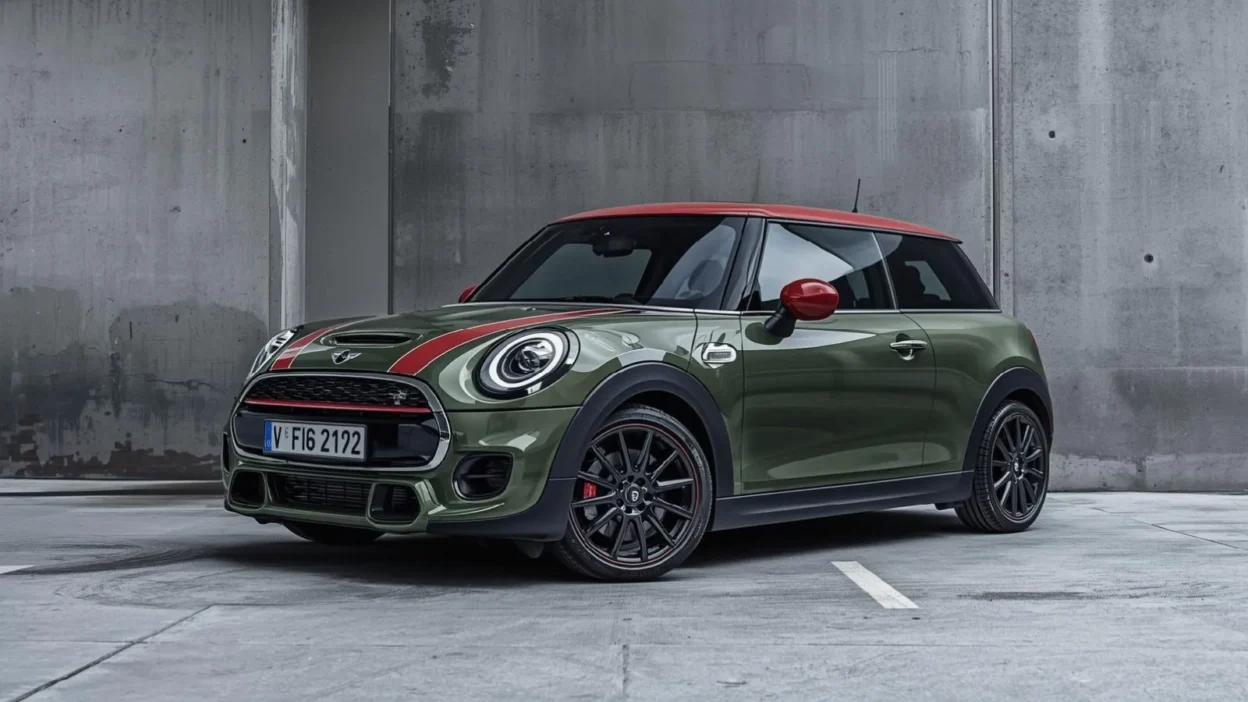
When it comes to compact cars that blend style, performance, and iconic design, the Mini Cooper stands out. But beyond its unmistakable look, there’s a number that can tell you a lot about how the car drives: its weight.
Often overlooked, the weight of a vehicle affects everything from acceleration and handling to fuel efficiency and safety. For prospective buyers, car enthusiasts, or anyone comparing compact vehicles, understanding the Mini Cooper’s weight is essential.
In this guide, we’ll break down the curb weight of every Mini Cooper model from the nimble Hardtop and sporty Cooper S to the versatile Countryman and electric Mini SE.
We’ll also explore how weight influences performance, fuel consumption, and driving experience, and compare it with competitors in the compact car segment. Whether you’re buying your first Mini or just curious about what makes it tick, this article has all the details you need.
Understanding Car Weight
Before diving into the specifics of Mini Cooper models, it’s important to understand what “car weight” actually means. When people talk about a car’s weight, they are usually referring to the curb weight the weight of the vehicle with all standard equipment, a full tank of fuel, and all necessary fluids, but without passengers or cargo. Another common term is gross vehicle weight, which includes the maximum weight of the car when fully loaded with passengers, cargo, and optional accessories.
Weight isn’t just a number on a specification sheet; it directly affects how a car performs on the road. A lighter car generally accelerates faster, brakes more efficiently, and handles corners with greater agility. On the other hand, heavier vehicles often provide a more stable ride, better traction, and sometimes enhanced safety in collisions.
For Mini Cooper enthusiasts, understanding weight is particularly important because even small differences like upgrading from a base Cooper to a Cooper S or adding optional features can influence performance and fuel efficiency. Additionally, with electric models like the Mini SE, battery weight significantly increases the car’s overall mass, affecting handling compared to gas-powered versions.
In the next section, we’ll break down the curb weight of every Mini Cooper model, so you can see exactly how each one compares and what that means for your driving experience.
Mini Cooper Weight by Model
The Mini Cooper lineup offers several models, each with distinct weights that influence performance, handling, and fuel efficiency. Let’s break down the curb weight of each model.
1. Mini Cooper Hardtop (2-Door & 4-Door):
The classic Mini Cooper Hardtop is the lightest of the lineup. The base 2-Door model typically weighs between 2,755–2,850 lbs, while the 4-Door version adds a bit more, around 2,900–3,000 lbs. The sportier Cooper S trims add approximately 100–150 lbs due to a larger engine and performance enhancements.
2. Mini Cooper Convertible:
Convertibles weigh slightly more due to reinforced frames and the folding roof mechanism. Expect a curb weight between 2,900–3,100 lbs, with the Cooper S Convertible reaching closer to 3,200 lbs.
3. Mini Cooper Clubman:
The Clubman’s extended body and extra rear doors increase weight, generally 3,050–3,200 lbs. The John Cooper Works (JCW) version adds extra performance components, pushing it near 3,300 lbs.
4. Mini Cooper Countryman:
As the largest Mini model, the Countryman weighs significantly more, ranging from 3,250–3,500 lbs. All-wheel drive options and larger engines add additional weight.
5. Mini Electric (SE):
The all-electric Mini SE is heavier due to its battery pack, with a curb weight of approximately 3,153 lbs, slightly higher than the gas-powered Hardtop models.
Understanding these weights helps buyers choose the right model for performance, fuel efficiency, and handling preferences.
Weight Factors: What Makes Mini Coopers Heavier or Lighter
Several factors influence the weight of a Mini Cooper, which helps explain why different models and trims vary so much. One of the main contributors is the engine type. Base models with smaller engines naturally weigh less, while performance-focused versions, like the Cooper S or John Cooper Works (JCW), include larger engines, upgraded exhaust systems, and reinforced suspension components, adding extra pounds.
Another important factor is the body and materials. Convertibles, for example, require reinforced frames to maintain structural integrity without a fixed roof, which increases weight. Similarly, larger models like the Clubman and Countryman use additional materials to support their extended chassis and extra doors.
Optional features and packages also affect weight. Sunroofs, premium audio systems, navigation packages, and all-wheel-drive systems can add anywhere from 50–150 lbs, sometimes more. Even seemingly small additions like alloy wheels or roof racks contribute to the total mass.
For electric Mini Coopers, the battery pack is a major factor. While electric models offer instant torque and smooth driving, the heavy lithium-ion battery significantly increases curb weight compared to gas-powered versions.
Understanding these factors is crucial because weight directly affects handling, acceleration, braking, and fuel efficiency. Knowing what contributes to a Mini Cooper’s weight allows buyers to make informed decisions based on driving style, performance expectations, and optional features.
Mini Cooper Weight vs Competitors
When evaluating the Mini Cooper, understanding how its weight compares to other compact cars can give buyers a better sense of performance, handling, and efficiency. Despite its small size, the Mini Cooper is often slightly heavier than similarly sized hatchbacks due to its solid build, safety features, and premium materials.
For example, the Mini Cooper Hardtop 2-Door weighs around 2,755–2,850 lbs, while competitors like the Volkswagen Golf or Honda Civic Hatchback typically weigh between 2,700–2,900 lbs, making them similar but often slightly lighter. The sportier Mini Cooper S and John Cooper Works trims, however, can weigh more than 3,000 lbs, giving them a more planted feel on the road but slightly affecting fuel efficiency.
In the subcompact luxury segment, the Mini Cooper often compares to the Audi A1 or BMW 1 Series. Here, Mini’s weight is competitive, but its smaller footprint gives it a nimble handling advantage. The Mini Countryman, being the largest model, weighs 3,250–3,500 lbs, which is closer to small crossover competitors like the Mazda CX-30 or BMW X1, yet it retains the Mini’s signature driving dynamics.
Understanding these comparisons helps potential buyers weigh trade-offs between agility, fuel economy, and stability. For those prioritizing nimbleness, lighter trims may be preferable, while those seeking a more solid, SUV-like feel may opt for larger models.
Practical Implications of Mini Cooper Weight
The weight of a Mini Cooper affects more than just numbers on a spec sheet it has real-world consequences for performance, fuel efficiency, and driving experience. Lighter models, like the base Hardtop 2-Door, tend to accelerate quicker, stop more efficiently, and feel nimble on tight city streets or winding roads. This makes them ideal for drivers who prioritize agility and sporty handling.
Heavier models, including the Convertible, Clubman, Countryman, and electric Mini SE, provide a more stable and composed ride, particularly at higher speeds or on highways. The added weight can improve traction and stability in adverse conditions, like rain or snow, but may slightly reduce acceleration and fuel economy.
Fuel efficiency is directly tied to weight: lighter Minis typically achieve higher miles per gallon, while heavier models, especially all-wheel-drive trims and the electric Mini SEconsume more energy or electricity due to the extra mass. Safety is another consideration. A heavier vehicle often fares better in collisions, as the increased mass helps absorb impact forces, although Mini Coopers are well-engineered across all models.
Understanding these practical implications helps buyers match a Mini Cooper to their lifestyle. If you’re seeking a spirited city car, a lighter Hardtop might be perfect. If stability, comfort, or EV technology is your priority, heavier trims like the Countryman or Mini SE could be more suitable.
Tips for Potential Buyers
When choosing a Mini Cooper, understanding the weight of each model can help you make a smarter decision. The first tip is to consider your driving style. If you enjoy nimble handling, quick acceleration, and city maneuverability, lighter trims like the Hardtop 2-Door are ideal. These models offer the classic Mini driving feel and are easier to park in tight urban spaces.
For buyers who prioritize stability, cargo space, and comfort, larger models such as the Clubman, Countryman, or Convertible might be better, even though they are heavier. These models handle longer trips more comfortably and provide more room for passengers or gear.
Next, think about optional features and packages. Sunroofs, premium audio systems, all-wheel-drive, or upgraded performance packages can add significant weight, affecting fuel efficiency and handling. For electric Mini SE models, remember that battery weight adds mass but delivers instant torque and a smooth driving experience.
Another tip is to compare against competitors. Understanding how the Mini Cooper’s weight compares to similar compact cars can clarify trade-offs between agility, fuel efficiency, and stability.
Finally, if you plan to customize or carry extra cargo regularly, consider how added weight affects performance and handling. By weighing these factors carefully, you can choose the Mini Cooper that best fits your driving habits, lifestyle, and expectations.
FAQs About Mini Cooper Weight
1. What is the lightest Mini Cooper model?
The lightest Mini Cooper model is the base Hardtop 2-Door, with a curb weight ranging between 2,755–2,850 lbs. This makes it the most agile and responsive model in the lineup.
2. Does weight affect Mini Cooper performance significantly?
Yes, weight plays a key role in performance. Lighter Mini Coopers accelerate faster and handle more easily, while heavier models offer better stability, especially at higher speeds or on rougher roads. Heavier cars may also provide better traction in adverse weather.
3. How does the weight of the Mini Cooper compare to previous generations?
The current generation of Mini Coopers tends to be slightly heavier than earlier models due to increased safety features, advanced technologies, and larger body sizes. For instance, the 2026 Mini Cooper has a bit more weight compared to the 2015 model, which is attributed to enhanced features and modern equipment.
4. Are electric Mini Coopers heavier than gas versions?
Yes, the Mini Electric SE weighs more than the gasoline versions due to the weight of the battery pack. The SE typically weighs around 3,150 lbs, compared to a base Hardtop at 2,755 lbs.
5. How does the Mini Cooper weight impact fuel efficiency?
Heavier models, like the Countryman or Mini SE, tend to consume more fuel or energy, while lighter models typically achieve higher miles per gallon, making them better for those focused on fuel efficiency.
Conclusion
Understanding the weight of a Mini Cooper is more than just knowing a number it’s a key factor that influences performance, fuel efficiency, handling, and overall driving experience. From the nimble and lightweight Hardtop 2-Door to the larger, more stable Countryman and the all-electric Mini SE, each model has unique characteristics shaped by its curb weight.
For prospective buyers, knowing these differences is essential. Lighter models are ideal for city driving, spirited handling, and higher fuel efficiency, while heavier models provide stability, comfort, and additional features that enhance the driving experience. Optional packages, all-wheel drive, and electric batteries further influence weight, so it’s important to consider these elements when choosing the right Mini Cooper for your lifestyle.
Comparing Mini Cooper weights with competitors also highlights its unique position in the compact and subcompact car segments. Despite its small size, Mini offers a solid, premium build that slightly increases weight but delivers superior driving dynamics and safety.
Ultimately, whether you prioritize agility, performance, efficiency, or comfort, understanding weight helps you make an informed decision. By carefully considering model-specific weights and practical implications, you can select the Mini Cooper that perfectly matches your driving habits, personal preferences, and lifestyle, ensuring a rewarding ownership experience for years to come.

Silva is a passionate writer and thinker dedicated to capturing the essence of life through inspiring quotes and reflections. With a keen eye for words that motivate, uplift, and spark meaningful thought, Silva shares insights that resonate deeply with readers seeking positivity, wisdom, and self-growth. At quoteblom.com, Silva’s work brings a blend of creativity and authenticity, making every quote a moment of inspiration.