
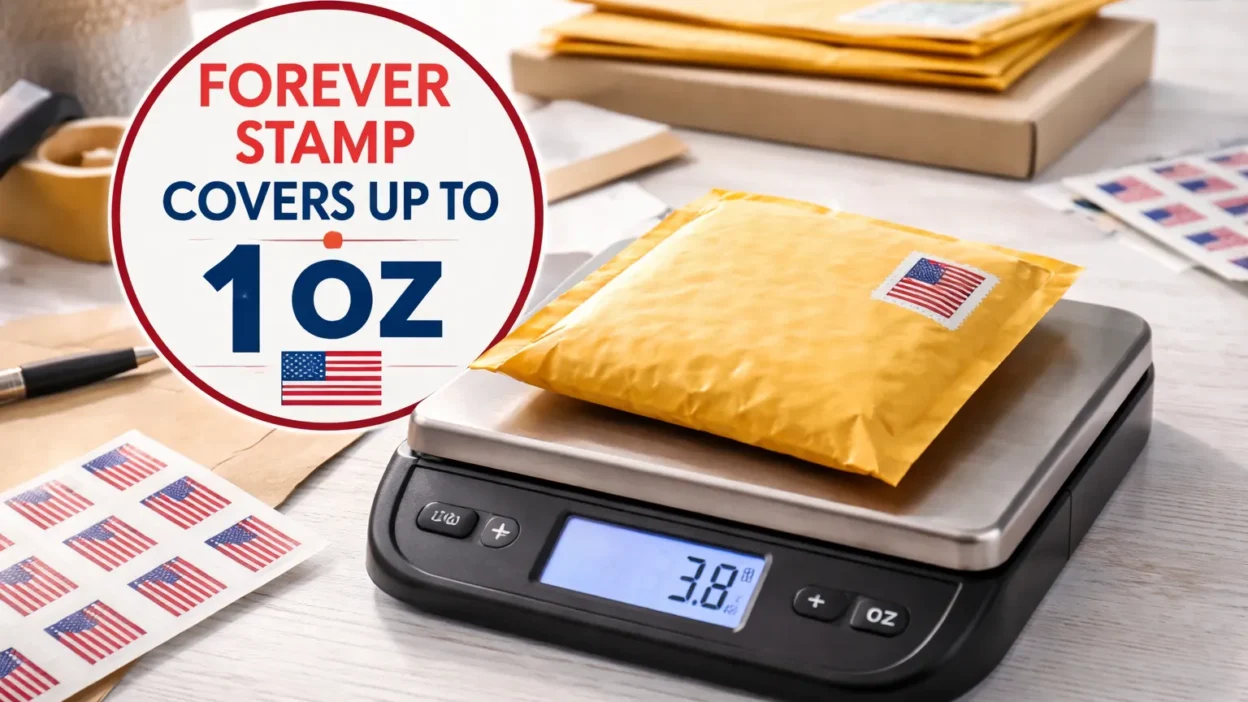
Understanding the Forever Stamp weight limit is essential for anyone who sends letters through USPS, whether for personal, business, or official purposes. While Forever Stamps are designed to simplify mailing by covering standard First-Class letter postage, many people mistakenly assume one stamp works for every envelope.
In reality, weight, size, and thickness rules play a crucial role in determining whether your mail will be delivered without issues. Exceeding the allowed weight can result in delayed delivery, returned mail, or unexpected postage-due charges for the recipient.
With postage rates increasing over time, using Forever Stamps correctly has become more important than ever. This guide breaks down exactly how much weight a Forever Stamp covers, what happens when your letter goes over the limit, and how to add extra postage when needed. By the end of this article, you’ll know how to mail letters confidently, avoid common mistakes, and ensure your mail reaches its destination smoothly.
.
What Is a Forever Stamp?
A Forever Stamp is a type of USPS postage stamp that can be used to mail a standard First-Class letter regardless of future postage rate increases. Introduced by the United States Postal Service in 2007, Forever Stamps were designed to make mailing simpler and more cost-effective for consumers. Once purchased, they never expire and always retain their mailing value for eligible letters.
The term “forever” means that even if USPS raises First-Class Mail prices, a Forever Stamp will still cover the cost of sending a qualifying letter without requiring additional postage. This makes them especially convenient for people who mail letters frequently or want to buy stamps in bulk without worrying about rate changes.
Forever Stamps are primarily intended for standard domestic letters that meet USPS size, shape, and weight requirements. They are not designed for large envelopes, packages, or international mail unless combined with additional postage. While the stamp covers the base mailing cost, it does not automatically cover extra charges related to weight, thickness, or non-machinable envelopes.
Because of their flexibility and long-term value, Forever Stamps remain one of the most popular and widely used postage options in the United States.
Official Forever Stamp Weight Limit
A single Forever Stamp covers the postage for a standard First-Class Mail letter weighing up to 1 ounce. This is the official weight limit set by the United States Postal Service for letters mailed using one Forever Stamp. As long as your letter meets USPS size, thickness, and flexibility requirements, one stamp is sufficient for mailing within the United States.
If your letter weighs more than 1 ounce, additional postage is required for each extra ounce or fraction of an ounce. USPS charges incremental postage beyond the first ounce, meaning even slightly exceeding the limit—such as 1.1 ounces—requires extra postage. This is a common issue for letters containing multiple pages, photos, cards, or thicker paper.
It’s also important to note that the weight limit applies only to standard letters, not large envelopes (flats) or packages. Even if your mail weighs under 1 ounce, it may still require extra postage if it exceeds size or thickness guidelines or is considered non-machinable.
Understanding the Forever Stamp weight limit helps prevent returned mail, delivery delays, and postage-due charges. Weighing your letter before mailing ensures that your Forever Stamp fully covers the required postage and your mail reaches its destination without problems.
What Happens If You Exceed the Weight Limit?
When a letter exceeds the Forever Stamp weight limit, USPS may not deliver it as expected. If your mail weighs more than 1 ounce and does not include the required additional postage, several outcomes are possible. One common result is that the letter is returned to the sender with a notice explaining the insufficient postage. This can cause delays, especially for time-sensitive mail such as bills or legal documents.
In some cases, USPS may still deliver the letter but charge the recipient postage due upon delivery. This can create inconvenience for the receiver and may reflect poorly on the sender, particularly in professional or business communications. unless mail may also experience processing delays as it is removed from automated sorting systems for manual handling.
Repeatedly mailing unless letters without proper postage can increase the risk of lost or damaged mail. Thicker or heavier envelopes are more likely to bend, tear, or get caught in sorting machines.
To avoid these issues, it’s important to weigh your letter accurately and add the correct amount of postage. Even a small weight increase beyond 1 ounce requires additional postage, making careful preparation essential for smooth and timely delivery.
Additional Postage for Heavier Letters
If your letter exceeds the 1-ounce limit covered by a single Forever Stamp, you’ll need to add additional postage for each extra ounce or fraction of an ounce. USPS first-class mail charges are incremental, meaning even an extra 0.1 ounce requires extra postage. For example, if your letter weighs 1.3 ounces, you’ll need a Forever Stamp plus additional postage for the extra 0.3 ounce.
The additional postage can be applied using additional ounce stamps or by adding more Forever Stamps. For heavier letters, it’s often easier to combine one Forever Stamp with small-denomination stamps to cover the extra weight. USPS also allows the use of printed postage from online calculators or postage meters, which automatically calculate the exact cost for unless letters.
It’s important to note that extra postage is not only determined by weight but also by size, thickness, and shape. Non-standard or rigid envelopes may require additional charges, even if the weight is under 1 ounce. Using proper weighing tools or checking with your local post office ensures that your mail is correctly stamped, preventing delays, returned mail, or postage-due fees.
By understanding how to apply additional postage, you can confidently mail heavier letters while ensuring they reach the recipient without issues.
Forever Stamp vs Other USPS Mailing Options
While Forever Stamps are convenient for standard First-Class letters, they are not always the best option for every type of mail. Understanding the differences between Forever Stamps and other USPS mailing services helps ensure your mail is properly prepared and cost-effective.
A single Forever Stamp covers only a standard letter up to 1 ounce, whereas First-Class Mail encompasses letters, flats (large envelopes), and small parcels with varying postage rates. For larger envelopes or heavier letters, additional postage is required, and using Forever Stamps alone may not be sufficient.
Priority Mail is another option for items that exceed First-Class limits. Priority Mail allows for heavier packages and offers faster delivery, tracking, and insurance, but Forever Stamps cannot fully cover these costs. Similarly, Flat Rate envelopes and boxes include postage in the price regardless of weight, making them a better choice for heavier or bulkier items.
For domestic standard letters under 1 ounce, Forever Stamps are ideal, offering simplicity and protection against future postage increases. However, for letters that are oversized, unless , or need extra services like tracking or insurance, alternative USPS mailing options may be more suitable.
Envelope Size, Shape, and Thickness Rules
The Forever Stamp weight limit applies not only to weight but also to the size, shape, and thickness of the envelope. USPS has strict guidelines to ensure that letters can be processed efficiently through automated sorting machines. A standard First-Class letter must meet the following criteria:
- Size: Minimum 5 inches long, 3-1/2 inches high, and 0.007 inches thick; maximum 11-1/2 inches long, 6-1/8 inches high, and 1/4 inch thick.
- Shape: Must be rectangular; square, circular, or unusually shaped envelopes may require extra postage.
- Flexibility: Letters must bend easily; rigid, padded, or lumpy envelopes are considered non-machinable and require additional postage.
Non-standard or non-machinable letters can increase mailing costs, even if the weight is under 1 ounce. Examples include thick greeting cards, photo envelopes, or envelopes with clasps or buttons. These letters may require extra postage, separate handling, or manual processing.
By following these envelope rules, you ensure that your mail qualifies for the standard Forever Stamp and avoids delays, additional charges, or returned mail. Always measure and check the thickness before mailing, especially for bulk or heavier letters.
How to Weigh a Letter Accurately
Weighing your letter correctly is essential to ensure that a Forever Stamp covers the postage and prevents returned mail or postage-due charges. Even small weight differences can require additional postage, so accuracy matters.
The simplest way to weigh a letter is with a digital kitchen or postal scale. Place the letter on the scale and record the weight in ounces. Make sure the envelope is sealed and includes all contents, such as cards, photos, or inserts, because these can add extra weight.
If you don’t have a scale, you can estimate weight using standard guidelines: a typical one-page letter on regular 20-pound paper usually weighs less than 1 ounce, while a two-page letter with an envelope may weigh slightly over 1 ounce. However, estimation is less precise and can risk under-posting.
Another reliable option is to take your letter to the post office. USPS clerks can weigh the letter, calculate the exact postage needed, and advise whether additional stamps are required. Many post offices also provide online postage calculators, where you can enter envelope size and content to estimate postage before mailing.
Accurate weighing ensures your mail reaches its destination smoothly and avoids unnecessary delays or charges.
Common Forever Stamp Mailing Mistakes
Even experienced mailers often make mistakes when using Forever Stamps, which can result in delayed delivery, postage due, or returned mail. Being aware of these common errors can save time, money, and frustration.
One of the most frequent mistakes is assuming a single Forever Stamp covers any letter, regardless of weight. Remember, one stamp only covers a standard letter up to 1 ounce. Any additional weight requires extra postage.
Another common error involves ignoring envelope size and shape rules. Square, rigid, or padded envelopes are considered non-machinable and need additional postage, even if they weigh under 1 ounce. Similarly, unusually thick envelopes or letters with clasps, buttons, or decorations can trigger extra charges.
Many people also overlook the total contents of the envelope. Extra pages, photos, or inserts can increase weight, pushing the letter beyond the 1-ounce limit.
Finally, failing to double-check postage when mailing multiple letters can lead to inconsistencies and mistakes. Each letter must be weighed and stamped individually if contents vary.
By avoiding these common mistakes, you can ensure that your mail reaches its destination efficiently, your Forever Stamps are used correctly, and both you and the recipient avoid unnecessary postage issues.
Frequently Asked Questions
Q1: Can I use multiple Forever Stamps on one letter?
Yes. If your letter exceeds 1 ounce, you can combine Forever Stamps or use additional ounce stamps to cover the extra postage.
Q2: Do Forever Stamps expire?
No. Forever Stamps are valid indefinitely and can always be used for First-Class Mail, even if postage rates increase.
Q3: What happens if my letter is unless ?
unless letters may be returned to the sender, delivered with postage due, or delayed. Always weigh your mail to ensure proper postage.
Q4: Can I use a Forever Stamp for international mail?
Standard Forever Stamps only cover domestic mail. For international letters, use a Global Forever Stamp or pay the correct international postage.
Q5: How many ounces does one Forever Stamp cover?
A single Forever Stamp covers up to 1 ounce for standard First-Class letters.
Q6: Are non-standard envelopes covered by Forever Stamps?
No. Letters that are square, rigid, or oversized may require additional postage, even if under 1 ounce.
These FAQs answer the most common questions about using Forever Stamps and help mailers avoid delays, extra charges, and confusion.
Conclusion
Understanding the Forever Stamp weight limit is essential for anyone who regularly sends mail. A single Forever Stamp covers a standard First-Class letter up to 1 ounce, but exceeding that weight—or using non-standard envelopes—requires additional postage. Many mailers make the mistake of assuming one stamp is always enough, which can result in returned mail, delivery delays, or postage-due charges for the recipient. By familiarizing yourself with USPS rules regarding weight, size, thickness, and shape, you can avoid these common pitfalls.
Accurately weighing your letters, checking envelope dimensions, and adding the proper extra postage when needed ensures that your mail reaches its destination smoothly and on time. Forever Stamps are convenient, cost-effective, and protect against future postage rate increases, but they must be used correctly to maximize their benefits.
Whether you are sending personal letters, business correspondence, or greeting cards, following these guidelines saves time, money, and stress. With proper preparation, your Forever Stamps will always serve their purpose, helping your mail arrive safely and efficiently. Take the time to weigh, measure, and stamp your letters correctly—it’s a small step that guarantees peace of mind every time you send mail.

Joseph is a passionate writer and quote curator at QuoteBlom.com, dedicated to bringing inspiration, wisdom, and a touch of motivation to every reader. With a keen eye for meaningful words and life-changing insights, Joseph carefully selects and shares quotes that uplift, empower, and spark thoughtful reflection. Whether you’re looking for a daily dose of positivity, love, or life advice, Joseph’s writings are designed to resonate with readers from all walks of life, making each visit to QuoteBlom.com a journey of inspiration.