
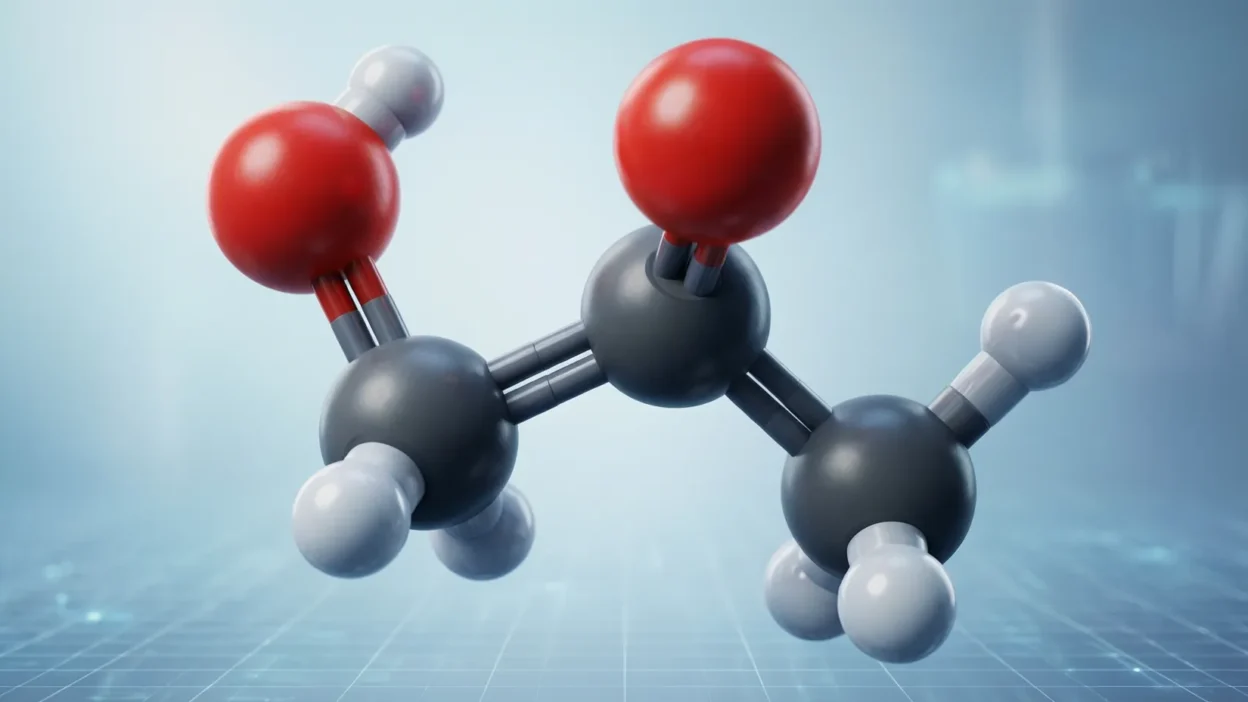
Ethyl acetate is one of the most widely used organic solvents in laboratories and industries around the world. Known for its fruity odor and excellent solvency, it plays a crucial role in pharmaceuticals, paints, coatings, adhesives, and even food flavorings.
While its applications are diverse, a fundamental aspect that chemists and researchers must understand is its molecular weight. The molecular weight of a compound is essential for performing accurate calculations, preparing solutions, and conducting chemical reactions safely and efficiently.
For ethyl acetate, this value directly impacts stoichiometry, concentration measurements, and analytical techniques such as chromatography. Understanding its molecular weight not only aids in precise laboratory work but also informs industrial processes where consistent quality and performance are critical.
In this article, we will explore ethyl acetate’s molecular weight, how it is calculated, its significance, and practical applications in both scientific and industrial contexts.
Chemical Basics of Ethyl Acetate
Ethyl acetate, with the molecular formula C₄H₈O₂, is a colorless, volatile liquid with a sweet, fruity odor. It belongs to the ester family, formed through the reaction of ethanol and acetic acid. Its chemical structure consists of a carbonyl group (C=O) bonded to an oxygen atom, which is further attached to an ethyl group, giving it both polarity and moderate hydrophobic characteristics.
This solvent has several notable physical properties: a boiling point of 77.1°C, a melting point of −83.6°C, and a density of 0.897 g/cm³. It is highly soluble in most organic solvents and moderately soluble in water, which makes it versatile for use in chemical reactions and extractions. Chemically, ethyl acetate is relatively stable under standard conditions, but it can undergo hydrolysis in the presence of acids or bases, breaking down into ethanol and acetic acid.
Understanding these basic chemical properties is essential for working safely and effectively with ethyl acetate. Its polarity, volatility, and solvent capabilities determine how it interacts with other compounds, influencing everything from reaction rates to extraction efficiency. These foundational characteristics, combined with its molecular weight, form the basis for calculating quantities in laboratory experiments and scaling processes in industrial applications.
Molecular Weight of Ethyl Acetate
The molecular weight (or molar mass) of a compound is the sum of the atomic masses of all the atoms in its molecular formula. For ethyl acetate, the molecular formula is C₄H₈O₂, meaning it contains four carbon atoms, eight hydrogen atoms, and two oxygen atoms.
To calculate its molecular weight step by step:
- Carbon (C): 4 atoms × 12.01 g/mol = 48.04 g/mol
- Hydrogen (H): 8 atoms × 1.008 g/mol = 8.064 g/mol
- Oxygen (O): 2 atoms × 16.00 g/mol = 32.00 g/mol
Adding these together: 48.04 + 8.064 + 32.00 = 88.11 g/mol.
This value is crucial in chemistry and industry because it allows precise measurement and conversion between grams and moles, which is the foundation of stoichiometry. For example, if a reaction requires 1 mole of ethyl acetate, a chemist knows exactly that 88.11 grams of the compound are needed. Similarly, in analytical methods like gas chromatography, accurate calculations of molecular weight ensure proper sample preparation and reliable results.
Beyond the laboratory, molecular weight also affects physical properties such as vapor pressure, diffusion rate, and density, which are essential in industrial processes like solvent extraction, coatings, and pharmaceutical formulations. Understanding ethyl acetate’s molecular weight is therefore a small but fundamental step toward safe, efficient, and effective chemical work.
Applications of Molecular Weight in Practical Chemistry
Understanding the molecular weight of ethyl acetate is not just an academic exercise—it has direct, practical applications in chemistry labs and industrial processes. One of the most important uses is in stoichiometry, where chemists calculate the exact amount of reactants needed for a chemical reaction. Knowing that ethyl acetate has a molecular weight of 88.11 g/mol allows precise conversion between grams and moles, ensuring that reactions proceed efficiently without excess waste.
Molecular weight is also critical in solution preparation. For instance, when making a specific molarity of ethyl acetate in a solvent, scientists rely on its molar mass to measure accurate quantities. This ensures consistency in experiments, whether it’s a small-scale laboratory reaction or a large industrial batch.
In analytical chemistry, molecular weight plays a key role in techniques such as gas chromatography and spectroscopy. Accurate knowledge of molar mass helps determine sample concentrations and predict retention times or spectra, which is essential for reliable analysis.
Additionally, understanding molecular weight affects safety and handling. Compounds with lower molecular weights, like ethyl acetate, tend to be more volatile, influencing storage conditions and ventilation requirements. In summary, knowing the molecular weight of ethyl acetate is fundamental for precise calculations, efficient reactions, and safe laboratory practices, bridging the gap between theory and real-world chemistry.
Industrial and Commercial Applications
Ethyl acetate is not only a laboratory staple but also a highly valued industrial solvent. Its moderate polarity, low toxicity, and volatility make it ideal for applications in paints, coatings, adhesives, and inks. In these industries, the molecular weight of 88.11 g/mol plays a crucial role in determining how much ethyl acetate is needed to achieve the desired concentration, viscosity, or evaporation rate. Accurate calculations based on molecular weight ensure consistent product quality and performance.
In the pharmaceutical and cosmetic industries, ethyl acetate is used as a solvent for extracting active ingredients or as a carrier in formulations. Precise knowledge of its molecular weight allows chemists to measure exact amounts required for reactions, dilutions, or blending, which is critical for safety and efficacy.
The food and flavoring industry also utilizes ethyl acetate as a natural flavoring agent. Here, its molecular weight informs the correct dosing to achieve taste consistency without compromising safety.
Moreover, molecular weight affects evaporation rates, density, and diffusion, which are essential parameters in industrial processes. For example, in solvent recovery systems, knowing the exact molar mass of ethyl acetate helps engineers design efficient distillation and recycling methods.
Overall, the molecular weight of ethyl acetate is more than a number; it is a key factor that influences quality control, efficiency, and safety across multiple industries, making it an indispensable part of both laboratory and commercial chemistry.
Safety Considerations
While ethyl acetate is generally considered a low-toxicity solvent, understanding its safety profile is essential due to its volatility and flammability. Its relatively low molecular weight of 88.11 g/mol contributes to a high evaporation rate, which increases the risk of inhalation and fire hazards. Proper handling and storage are therefore critical in both laboratories and industrial settings.
Ethyl acetate should always be used in a well-ventilated area or under a fume hood to minimize inhalation exposure. Prolonged or repeated exposure to its vapors may cause dizziness, headaches, or irritation to the eyes, nose, and respiratory tract. Wearing protective gloves, goggles, and lab coats is recommended to prevent skin and eye contact, especially during large-scale or high-concentration applications.
Storage guidelines require keeping ethyl acetate in cool, dry areas away from heat, sparks, and open flames, as it is highly flammable. Containers should be tightly sealed and clearly labeled. In industrial processes, monitoring vapor concentrations and using explosion-proof equipment is essential to prevent accidents.
In case of spills, absorbents such as sand or inert materials should be used, and proper disposal procedures followed to avoid environmental contamination. Understanding the molecular weight, volatility, and chemical behavior of ethyl acetate ensures safe handling, minimizes risks, and maintains compliance with health and safety regulations.
Related Compounds and Comparisons
Ethyl acetate is part of the ester family, which includes compounds such as methyl acetate, propyl acetate, and butyl acetate. Comparing these related esters provides insight into how molecular weight influences physical and chemical properties, as well as practical applications.
For example, methyl acetate (C₃H₆O₂) has a molecular weight of 74.08 g/mol, which is lower than ethyl acetate’s 88.11 g/mol. This lower molecular weight results in higher volatility and faster evaporation, making it suitable for quick-drying adhesives and coatings. On the other hand, butyl acetate (C₆H₁₂O₂) has a molecular weight of 116.16 g/mol, giving it lower volatility and slower evaporation, which is advantageous in applications requiring longer drying times, such as varnishes and lacquers.
These comparisons illustrate that even small differences in molecular weight can significantly affect properties like boiling point, density, solubility, and evaporation rate. Chemists and industrial engineers use these values to select the most suitable ester for a specific purpose.
Understanding molecular weight also helps in stoichiometric calculations, ensuring accurate reaction outcomes when substituting one ester for another in laboratory or industrial processes. In this way, ethyl acetate’s molecular weight serves as a benchmark for predicting performance and compatibility within the wider family of esters.
Fun Facts and Trivia About Ethyl Acetate
Ethyl acetate is more than just a chemical formula and molecular weight; it has some interesting characteristics and uses that make it a notable compound in both science and everyday life. Its sweet, fruity odor is reminiscent of pear or nail polish remover, which is why it is commonly used in perfumes, flavorings, and cosmetic products. This pleasant smell makes it more user-friendly compared to other organic solvents.
Historically, ethyl acetate was first synthesized in the 19th century through the esterification of ethanol and acetic acid, marking a significant development in organic chemistry. Since then, it has become one of the most widely used industrial solvents due to its low toxicity, high efficiency, and versatility.
In laboratories, ethyl acetate is often the solvent of choice for thin-layer chromatography (TLC) and column chromatography, helping chemists separate and analyze mixtures with precision. Its moderate polarity allows it to dissolve a wide range of organic compounds without reacting chemically, making it extremely useful in experimental settings.
Interestingly, its molecular weight of 88.11 g/mol directly influences its volatility, which is why it evaporates quickly when exposed to air. This property is exploited in nail polish removers, adhesives, and even decaffeination processes in the food industry.
Overall, ethyl acetate is a perfect example of a chemical that combines scientific significance, industrial utility, and everyday familiarity, making it both a practical and fascinating compound.
Frequently Asked Questions
1. What is the molecular weight of ethyl acetate?
The molecular weight of ethyl acetate is 88.11 g/mol. This value is calculated based on its molecular formula C₄H₈O₂, which contains four carbon atoms, eight hydrogen atoms, and two oxygen atoms.
2. How is the molecular weight of ethyl acetate calculated?
To calculate the molecular weight, multiply the number of atoms of each element by their atomic mass:
- Carbon: 4 × 12.01 = 48.04 g/mol
- Hydrogen: 8 × 1.008 = 8.064 g/mol
- Oxygen: 2 × 16.00 = 32.00 g/mol
Adding these gives 88.11 g/mol.
3. Why is knowing the molecular weight important?
Molecular weight is essential for stoichiometry, solution preparation, reaction calculations, and analytical techniques. It ensures accurate measurement and conversion between grams and moles.
4. What are the common uses of ethyl acetate?
Ethyl acetate is widely used as a solvent in paints, coatings, adhesives, perfumes, cosmetics, and pharmaceuticals. It is also used in laboratory chromatography and as a flavoring agent in the food industry.
5. Is ethyl acetate safe to handle?
Ethyl acetate is low in toxicity but highly volatile and flammable. Proper ventilation, protective equipment, and safe storage are essential to prevent inhalation, skin contact, and fire hazards.
6. How does molecular weight affect its properties?
Molecular weight influences volatility, evaporation rate, and density, which are critical for industrial processes and laboratory applications.
Conclusion
Understanding the molecular weight of ethyl acetate, which is 88.11 g/mol, is essential for anyone working with this versatile compound, whether in a laboratory, industrial, or educational setting. Molecular weight forms the foundation for accurate stoichiometric calculations, solution preparation, and analytical techniques, ensuring that chemical reactions and processes are carried out safely and efficiently.
Beyond the laboratory, ethyl acetate’s molecular weight influences physical properties such as volatility, evaporation rate, and density, which are critical factors in industrial applications. From paints, coatings, and adhesives to pharmaceuticals, cosmetics, and food flavorings, precise knowledge of molecular weight ensures product consistency, efficiency, and safety. It also helps in selecting related esters for specific applications, allowing chemists and engineers to make informed choices based on properties like boiling point and evaporation rate.
Safety is another key consideration. Understanding molecular weight, combined with knowledge of chemical behavior, helps professionals manage flammability, ventilation requirements, and handling precautions, minimizing risks in both laboratory and commercial environments.
In summary, ethyl acetate is more than a simple chemical solvent; it is a compound whose molecular weight underpins its scientific, industrial, and practical significance. By mastering this fundamental property, chemists, engineers, and students alike can utilize ethyl acetate effectively, safely, and with precision, bridging the gap between theoretical chemistry and real-world applications.

William is a passionate wordsmith who loves capturing the essence of life, love, and inspiration through quotes. With a keen eye for meaningful expressions, he curates and crafts words that resonate with readers across the globe. At Quoteblom.com, William’s goal is to bring wisdom, motivation, and a touch of positivity to every visitor, one quote at a time.