
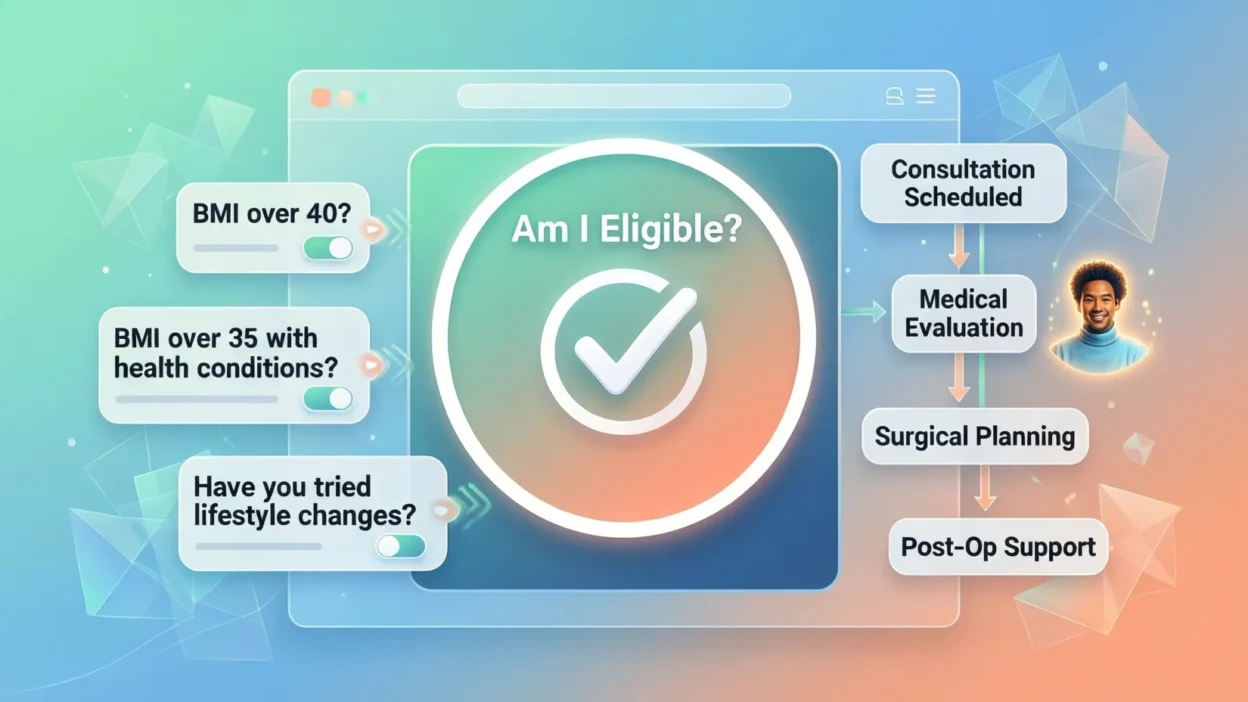
Struggling with weight loss can feel overwhelming, especially when diet and exercise alone aren’t enough. For many, weight loss surgery also known as bariatric surgery offers a life-changing solution, helping not just with shedding pounds but also improving overall health, energy, and quality of life.
But not everyone is automatically eligible. Qualifications for weight loss surgery depend on a combination of factors, including your body mass index (BMI), existing health conditions, and readiness to commit to lifestyle changes after surgery.
If you’ve been wondering, Do I qualify for weight loss surgery?, this article is designed to guide you. You’ll learn about the eligibility criteria, health considerations, types of surgery, risks, and benefits.
Plus, we’ve created an easy, interactive quiz that can help you assess whether bariatric surgery might be a suitable option for you. Take the first step toward understanding your options and making an informed decision about your health journey.
What Is Weight Loss Surgery?
Weight loss surgery, commonly called bariatric surgery, is a medical procedure designed to help people with obesity lose weight when traditional methods like diet and exercise haven’t worked. Unlike quick-fix solutions, bariatric surgery is a long-term tool that supports sustainable weight loss and can significantly improve health outcomes.
There are several types of weight loss surgery, each working in slightly different ways:
- Gastric Bypass (Roux-en-Y): Reduces stomach size and reroutes the digestive system, limiting food intake and nutrient absorption.
- Sleeve Gastrectomy: Removes a large portion of the stomach, helping you feel full faster.
- Adjustable Gastric Banding: Places a band around the upper stomach to restrict food intake.
- Biliopancreatic Diversion with Duodenal Switch: A more complex procedure that limits both food intake and nutrient absorption.
Beyond weight loss, these surgeries often improve or even resolve obesity-related health conditions like type 2 diabetes, high blood pressure, and sleep apnea.
It’s important to understand that bariatric surgery is not a quick fix—it requires commitment to healthy eating, regular exercise, and follow-up care. With the right preparation and support, however, weight loss surgery can be a life-changing step toward better health and overall well-being.
Who Typically Qualifies for Weight Loss Surgery?
Weight loss surgery isn’t for everyone—it’s reserved for individuals who meet specific medical criteria and are ready to commit to long-term lifestyle changes. The primary factor doctors consider is Body Mass Index (BMI). Generally:
- BMI of 40 or higher: Candidates may qualify even without other health issues.
- BMI of 35–39.9: Candidates usually need at least one obesity-related health condition, such as type 2 diabetes, high blood pressure, sleep apnea, or joint problems.
In addition to BMI, age and overall health are evaluated. Most adults in good physical condition can be considered, though extreme age or serious medical conditions may affect eligibility.
Doctors also assess psychological readiness, as surgery requires lifelong commitment to diet, exercise, and regular medical follow-up. Past weight loss attempts are reviewed to understand whether conservative methods have been exhausted.
Certain contraindications may prevent surgery, including uncontrolled psychiatric disorders, active substance abuse, or severe heart or lung disease.
Ultimately, eligibility isn’t just about numbers—it’s about your health, readiness, and commitment. This ensures that surgery is safe and effective, giving you the best chance for long-term weight loss and improved well-being.
Health Factors That Affect Eligibility
Beyond BMI and age, several health factors play a crucial role in determining eligibility for weight loss surgery. Physical health assessments are the first step. Doctors typically review your heart, lung, liver, and kidney function, and may order lab tests to check for conditions like anemia, diabetes, or thyroid disorders. These evaluations ensure that surgery is safe and feasible for your body.
Mental health is equally important. Bariatric surgery requires long-term lifestyle changes, so patients undergo a psychological evaluation to assess readiness, coping skills, and the presence of disorders such as depression, anxiety, or eating disorders. Addressing these issues beforehand improves the likelihood of successful post-surgery outcomes.
Doctors also consider your weight loss history. Individuals who have repeatedly tried diet, exercise, or medically supervised programs without sustained results are often better candidates.
Certain contraindications may prevent surgery, including active substance abuse, uncontrolled psychiatric conditions, or severe heart or lung disease. Smoking may also need to be stopped before surgery.
Ultimately, these health screenings ensure that the surgery is both safe and effective, tailoring the procedure to your unique needs while maximizing long-term success and reducing the risk of complications.
Understanding the Risks and Benefits
Weight loss surgery offers life-changing benefits, but it also comes with potential risks that every candidate should understand. On the benefits side, bariatric surgery can lead to significant, long-term weight loss and improvement or resolution of obesity-related health conditions such as type 2 diabetes, high blood pressure, sleep apnea, and joint pain. Many patients also experience increased energy, enhanced mobility, and an overall improvement in quality of life and self-confidence.
However, like any major surgery, there are risks. Short-term complications may include infection, bleeding, or reactions to anesthesia. Long-term risks can involve nutritional deficiencies, gallstones, or digestive issues, depending on the type of surgery performed. Committing to lifelong dietary changes and regular medical follow-up is essential to minimize these risks.
It’s also important to have realistic expectations. Surgery is a tool, not a quick fix—it works best when combined with proper nutrition, exercise, and behavioral changes. Patients who understand both the benefits and risks are better prepared for the physical and emotional journey ahead.
In summary, weight loss surgery can be transformative, but success depends on careful planning, medical guidance, and personal commitment to a healthier lifestyle.
Types of Weight Loss Surgery (Detailed)
There are several types of weight loss surgery, each designed to help patients lose weight in slightly different ways. Choosing the right procedure depends on your BMI, health conditions, and lifestyle goals.
- Gastric Bypass (Roux-en-Y): This surgery reduces the stomach’s size and reroutes the small intestine, limiting both food intake and nutrient absorption. It’s highly effective for long-term weight loss and improving conditions like type 2 diabetes, but it carries a higher risk of nutrient deficiencies.
- Sleeve Gastrectomy: About 75–80% of the stomach is removed, leaving a narrow “sleeve.” This restricts the amount of food you can eat and reduces hunger hormones. Recovery is relatively quick, making it one of the most popular procedures.
- Adjustable Gastric Banding: A silicone band is placed around the upper stomach to create a small pouch, slowing food intake. This method is less invasive but generally results in slower weight loss.
- Biliopancreatic Diversion with Duodenal Switch (BPD/DS): This complex surgery reduces stomach size and bypasses a significant portion of the small intestine, limiting both food intake and nutrient absorption. It’s highly effective but requires strict lifelong nutritional management.
Each procedure has unique benefits, risks, and recovery considerations, making a thorough discussion with a bariatric surgeon essential for choosing the right option.
Insurance and Cost Considerations
Weight loss surgery can be life-changing, but it’s also a significant financial investment. Fortunately, many insurance plans cover bariatric surgery if certain eligibility criteria are met. Most insurers require documentation of a BMI above 40—or a BMI above 35 with obesity-related health conditions such as diabetes, sleep apnea, or heart disease. They may also ask for proof of previous diet and exercise attempts, psychological evaluations, and participation in medically supervised weight loss programs.
If you have insurance coverage, it’s important to confirm which procedures are approved and understand potential out-of-pocket costs, including co-pays, deductibles, and hospital fees. Some plans only cover specific surgeries, like gastric bypass or sleeve gastrectomy.
For individuals without insurance, bariatric surgery can be expensive, with costs ranging from $15,000 to $30,000 or more, depending on the procedure and location. Some hospitals offer payment plans or financing options to make surgery more accessible.
Regardless of coverage, it’s essential to communicate with your insurance provider and surgeon’s office before scheduling surgery. Understanding financial requirements in advance ensures there are no surprises, allowing you to focus fully on preparation, recovery, and achieving the best possible health outcomes.
The Weight Loss Surgery Quiz
Wondering if you qualify for weight loss surgery? This quiz is designed to help you self-assess your eligibility. While it’s not a medical diagnosis, it can give you a clearer idea of whether bariatric surgery might be a suitable option.
Sample Questions:
- What is your current height and weight? (Used to calculate BMI)
- Do you have any obesity-related health conditions such as type 2 diabetes, high blood pressure, sleep apnea, or joint pain?
- Have you attempted diet, exercise, or medically supervised weight loss programs without lasting results?
- Are you currently between ages 18 and 65?
- Do you have any uncontrolled mental health conditions or substance abuse issues?
- Are you willing to commit to lifelong dietary, exercise, and lifestyle changes after surgery?
Scoring & Results:
- High Eligibility: BMI ≥40, or BMI ≥35 with one or more comorbidities, and readiness to follow post-surgery guidelines.
- Moderate Eligibility: Some comorbidities or BMI slightly below the standard thresholds; may require medical evaluation.
- Low Eligibility: BMI below 35 without comorbidities or significant medical/psychological contraindications; lifestyle changes recommended first.
Taking this quiz can guide your next steps, helping you discuss your results with a bariatric specialist for a professional evaluation.
Frequently Asked Questions
1. Am I eligible for weight loss surgery if I have diabetes?
Yes. Having type 2 diabetes is considered a qualifying health condition. If your BMI is 35 or higher and you have diabetes, you may be eligible.
2. What BMI do I need for gastric bypass?
Typically, a BMI of 40 or higher, or 35+ with obesity-related health conditions, qualifies. Your doctor will also consider your overall health.
3. Can I have weight loss surgery if I have sleep apnea?
Yes. Sleep apnea is a common comorbidity that increases eligibility. Proper pre-surgery evaluation and management are required.
4. How long does recovery take?
Recovery varies by procedure but usually ranges from 2–6 weeks for most patients. Full lifestyle adjustments may take several months.
5. Is weight loss surgery safe?
Bariatric surgery is generally safe when performed by experienced surgeons, but it carries risks like any major surgery. Long-term commitment to nutrition and follow-up care reduces complications.
6. Will insurance cover it?
Many insurance plans cover bariatric surgery if eligibility criteria are met. Confirm with your provider about coverage, pre-authorization, and required documentation.
7. Can I take the quiz if I’m under 18 or over 65?
The quiz can be taken by anyone, but medical eligibility is usually limited to adults within the typical age range of 18–65, depending on your doctor’s evaluation.
Conclusion
Determining whether you qualify for weight loss surgery is an important first step toward improving your health and overall quality of life. Eligibility is based on several factors, including BMI, obesity-related health conditions, age, and readiness to commit to lifestyle changes. While the decision to pursue bariatric surgery can feel overwhelming, understanding the criteria, risks, and benefits empowers you to make an informed choice.
Weight loss surgery is more than a procedure—it’s a tool for long-term transformation. Patients who combine surgery with healthy eating, regular exercise, and ongoing medical support often experience significant improvements in conditions like type 2 diabetes, high blood pressure, sleep apnea, and joint pain. The journey requires preparation, commitment, and realistic expectations, but the potential rewards can be life-changing.
Taking the weight loss surgery quiz is an easy way to assess your eligibility and determine your next steps. Remember, the quiz is a self-assessment tool, not a medical diagnosis. For a definitive evaluation, consulting a bariatric surgeon or healthcare professional is essential.
Your health journey starts with knowledge and action. By understanding your options and taking proactive steps today, you can move closer to a healthier, more active, and fulfilling life.

Silva is a passionate writer and thinker dedicated to capturing the essence of life through inspiring quotes and reflections. With a keen eye for words that motivate, uplift, and spark meaningful thought, Silva shares insights that resonate deeply with readers seeking positivity, wisdom, and self-growth. At quoteblom.com, Silva’s work brings a blend of creativity and authenticity, making every quote a moment of inspiration.