If you’re looking to improve your strength, flexibility, and overall fitness—without ever stepping foot in a gym—bodyweight squats could be your perfect solution. This simple yet powerful exercise requires no equipment and can be done anywhere, whether at home, in the park, or while traveling. Bodyweight squats primarily target the muscles in your legs, glutes, and core, making them an effective full-body movement for building strength and endurance.
But the benefits go beyond just muscle building. Bodyweight squats can help improve your posture, enhance your balance, and even boost your cardiovascular health. Whether you’re a fitness beginner or a seasoned athlete, squats are an essential move that can be scaled to your fitness level. In this guide, we’ll dive into everything you need to know about bodyweight squats, from proper technique to variations, common mistakes, and how to incorporate them into your routine.
The Benefits of Bodyweight Squats
Bodyweight squats are one of the most effective and versatile exercises you can incorporate into your fitness routine. Whether you’re aiming for strength, mobility, or cardiovascular fitness, squats deliver a wide range of benefits.
First, squats primarily target the lower body, engaging key muscles like the quadriceps, hamstrings, glutes, and calves. By strengthening these muscles, you can improve your overall leg power and functional movement. This makes squats an excellent choice for enhancing everyday activities like walking, climbing stairs, or even getting out of a chair.
Beyond muscle strength, squats are great for boosting flexibility and mobility, especially in the hips, knees, and ankles. When performed with proper form, squats can help maintain healthy joint function and prevent stiffness.
Another major benefit of bodyweight squats is their ability to improve balance and posture. The exercise engages your core muscles to stabilize your body throughout the movement, helping to enhance your overall balance and coordination. Additionally, squats are weight-bearing exercises, which can contribute to bone health and reduce the risk of osteoporosis as you age.
Finally, squats are an excellent way to boost cardiovascular health. Performing higher-rep squats can elevate your heart rate, improving stamina and endurance while also promoting fat loss.
Proper Technique: How to Do a Bodyweight Squat
Mastering proper squat form is crucial to avoid injury and maximize the effectiveness of the exercise. Here’s a step-by-step guide to performing a bodyweight squat correctly:
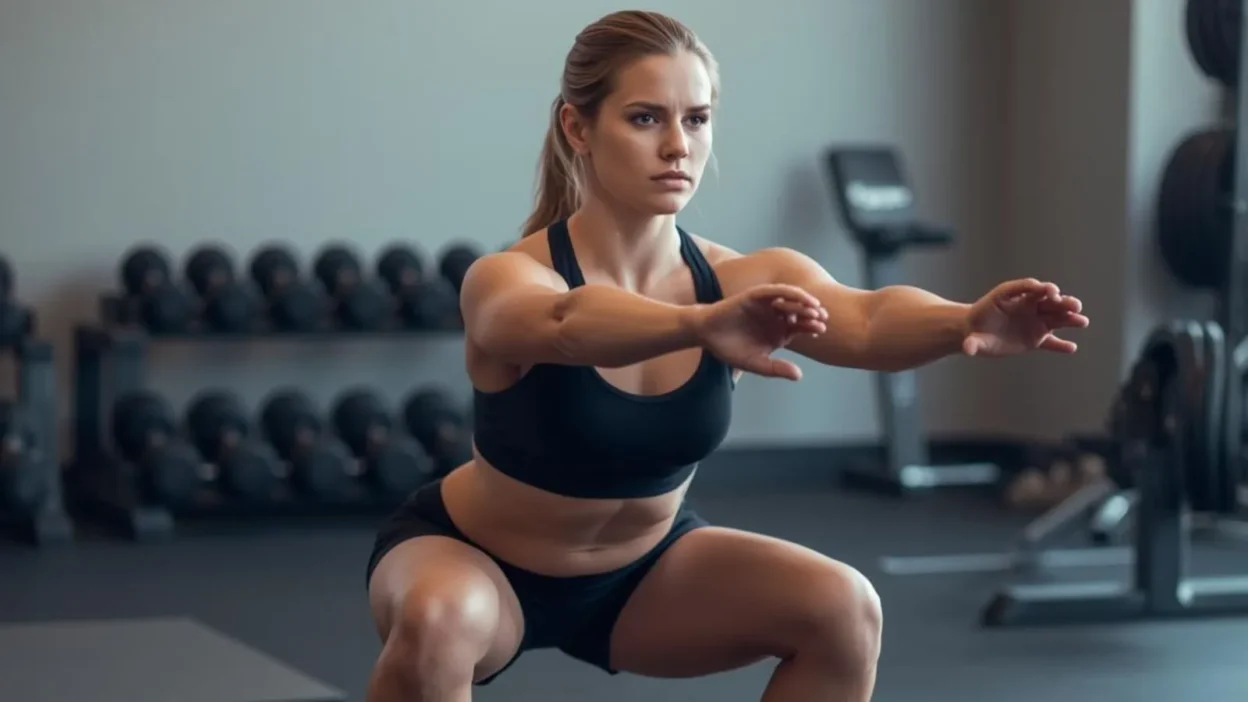
- Starting Position: Stand with your feet shoulder-width apart, toes slightly pointed outward. Keep your chest lifted, shoulders back, and your core engaged. Your arms should be either extended in front of you for balance or placed at your hips.
- Initiate the Squat: Begin by pushing your hips back as if you’re going to sit in a chair. Bend your knees slowly, ensuring that they track over your toes. Your weight should be distributed evenly across your feet, with your heels pressing into the ground.
- Lowering the Body: Continue to lower your body until your thighs are parallel to the ground or deeper if your flexibility allows. Your knees should not extend beyond your toes, and your back should remain straight—avoid rounding your lower back.
- Standing Up: To return to the starting position, push through your heels and engage your glutes. Straighten your knees and hips to return to a standing position, keeping your chest lifted and your core tight throughout the movement.
- Breathing: Inhale as you lower into the squat and exhale as you return to standing.
Common Mistakes to Avoid
Although bodyweight squats are simple in theory, improper form can lead to ineffective results or even injury. Here are some common mistakes to watch out for and tips on how to correct them:
- Knees Caving Inward: One of the most common mistakes is letting the knees collapse inward (valgus collapse) as you squat. This puts unnecessary stress on the knee joints and reduces the effectiveness of the movement. To avoid this, focus on keeping your knees aligned with your toes. Think of pushing your knees outward as you squat down.
- Leaning Too Far Forward: Another error is letting the torso lean too far forward, which places excessive strain on the lower back. Instead, initiate the movement by pushing your hips back, not by bending from the waist. Keep your chest lifted and your spine in a neutral position.
- Not Reaching Full Depth: Many people perform squats only partially, missing out on the full benefits. Ideally, aim to lower your thighs parallel to the floor, or deeper if flexibility allows. This ensures maximum engagement of the glutes and quads.
- Lifting Heels Off the Ground: Allowing your heels to come off the ground is a sign that your weight is shifting too far forward. Make sure to keep your weight evenly distributed through your entire foot, especially through the heels.
Bodyweight Squat Variations
Once you’ve mastered the basic bodyweight squat, you can introduce variations to target different muscle groups, increase intensity, and add variety to your workout routine. Here are some popular bodyweight squat variations to try:
- Jump Squats: This plyometric variation adds an explosive movement to your squat. Instead of standing up slowly, you push off the ground as you rise, jumping into the air before landing softly back into a squat position. Jump squats are great for improving power, increasing heart rate, and burning more calories.
- Sumo Squats: In this variation, you position your feet wider than shoulder-width apart and point your toes out at a 45-degree angle. Sumo squats place more emphasis on the inner thighs and glutes while still targeting the quads and hamstrings. This is a great variation for building lower body strength and toning the thighs.
- Pulse Squats: Pulse squats are performed by adding small, controlled “pulses” at the bottom of the squat. After reaching the lowest point, you perform small up-and-down movements before returning to the standing position. This increases time under tension, helping to build endurance and muscle definition.
- Bulgarian Split Squats: For a more challenging lower body exercise, try Bulgarian split squats. Elevate one foot on a bench or elevated surface behind you while keeping the other foot planted on the floor. This single-leg squat variation targets the quads, glutes, and hamstrings, enhancing balance and stability.
Incorporating Bodyweight Squats into Your Routine
Bodyweight squats are incredibly versatile, making them easy to incorporate into any fitness routine. Whether you’re looking to build strength, improve endurance, or simply stay active, squats can fit into a variety of training programs. Here’s how to make them work for you:
- Warm-Up: Before diving into your main workout, include a set of bodyweight squats to activate your legs and core. This helps prepare your muscles for more intense exercises and reduces the risk of injury. Perform 1–2 sets of 10–15 squats as part of your warm-up.
- Strength Training: Incorporate bodyweight squats into a lower body-focused workout. For example, pair squats with lunges, glute bridges, and calf raises. Aim for 3–4 sets of 12–15 reps. If you’re looking to challenge yourself, add variations like jump squats or pulse squats.
- Circuit Training: If you’re looking for a full-body workout or a way to boost cardiovascular fitness, incorporate squats into a circuit. Combine them with exercises like push-ups, burpees, or mountain climbers to keep your heart rate elevated. Perform 30 seconds of each exercise, then rest for 30 seconds, and repeat for 3–4 rounds.
- Progressive Overload: As you become more comfortable with bodyweight squats, challenge yourself by increasing the number of reps, sets, or time spent in the squat hold. Alternatively, try more advanced squat variations.
How Often Should You Do Bodyweight Squats?
The frequency of bodyweight squats depends on your fitness goals, current fitness level, and the intensity of your workouts. Here’s a general guide to help you determine how often to include squats in your routine:
- For Beginners: If you’re new to squats or exercise in general, start with 2–3 sessions per week. This allows your muscles time to adapt and recover between workouts. Focus on building proper form and gradually increase the number of reps and sets as your strength improves.
- For Intermediate Fitness Levels: If you’re comfortable with basic squats and want to increase intensity, aim for 3–4 sessions per week. Incorporate variations like jump squats or sumo squats to target different muscle groups. You can alternate between strength-focused squat sessions and more cardio-based squat workouts for variety.
- For Advanced Fitness Levels: Advanced exercisers can perform squats up to 5–6 times per week, depending on their training goals. If you’re including bodyweight squats as part of a more intense workout regimen, consider using them in circuit training or high-intensity interval training (HIIT) for added challenge. Be mindful of overtraining, and listen to your body to avoid burnout or injury.
- Rest and Recovery: Regardless of your fitness level, it’s important to allow adequate recovery time for your muscles. Rest days are essential for muscle repair and growth, especially if you’re incorporating squats frequently into your routine.
Bodyweight Squats for Different Fitness Goals
Bodyweight squats are a versatile exercise that can help you achieve a variety of fitness goals. Whether you want to build strength, improve flexibility, enhance endurance, or lose weight, squats can be adapted to suit your specific needs.
- Strength and Muscle Building: To build muscle and strength in your lower body, focus on performing controlled, full-range bodyweight squats. Aim for 3–4 sets of 8–12 reps, and challenge yourself by increasing the difficulty with squat variations such as jump squats or Bulgarian split squats. If you want to take it a step further, incorporate a progression like adding a hold at the bottom of each squat to increase time under tension.
- Fat Loss and Conditioning: If weight loss or cardiovascular conditioning is your primary goal, high-rep bodyweight squats can elevate your heart rate and burn calories. Perform 4–5 sets of 15–25 reps, or add squat variations like jump squats and pulse squats to keep the intensity high. These exercises help promote fat burning while toning your legs and glutes.
- Flexibility and Mobility: To improve flexibility and joint mobility, focus on the depth and range of motion during your squats. Use slower, more deliberate movements and hold the squat at the bottom position to enhance hip and ankle flexibility. Pair this with deep lunges or hip stretches to improve overall flexibility.
- Endurance and Stamina: For building muscular endurance, focus on doing high-rep bodyweight squats in short bursts. Perform 3–4 rounds of 30–60 seconds of squats with minimal rest between sets to build stamina and improve muscular endurance.
Tracking Progress with Bodyweight Squats
Tracking your progress with bodyweight squats is an important part of any fitness journey. It helps you stay motivated, measure improvement, and adjust your workouts accordingly. Here are several ways to track your squat progress effectively:
- Reps and Sets: The most straightforward way to track progress is by increasing the number of reps or sets you perform. Start with a baseline, such as 3 sets of 10 squats, and gradually increase the volume as your strength improves. Keep a workout log to record how many reps and sets you complete each session.
- Time Under Tension: For more advanced tracking, focus on the time spent in the squat position. Holding a squat at the bottom for a few seconds before rising back up can help increase muscle endurance and improve form. Gradually increase the hold time to challenge yourself further.
- Exercise Variations: As you advance in your squats, incorporate different variations to track progress. Start with standard bodyweight squats, then move to jump squats, sumo squats, or Bulgarian split squats. Tracking which variations you can perform with good form can show significant progress in strength and stability.
- Form and Technique: Keep an eye on improvements in your form, such as deeper squats, a straighter back, or better knee alignment. Filming yourself periodically or having a coach or workout buddy assess your form can help you spot areas for improvement.
Safety Tips for Performing Bodyweight Squats
While bodyweight squats are a great exercise for building strength and improving mobility, it’s crucial to perform them with proper form to avoid injury. Here are some safety tips to ensure you’re squatting safely:
- Warm Up Properly: Always start with a dynamic warm-up to prepare your muscles and joints for squatting. Spend a few minutes performing exercises like leg swings, hip circles, and light cardio to get your blood flowing and reduce the risk of strains.
- Maintain Proper Posture: Keep your chest lifted, shoulders back, and core engaged throughout the movement. Avoid rounding your back, as this can place strain on your spine. Ensure your knees are aligned with your toes and do not extend beyond your feet to protect your knee joints.
- Foot Placement: Keep your feet shoulder-width apart with toes slightly pointed outward. Make sure your weight is distributed evenly across your feet, particularly through the heels and midfoot. Never let your heels lift off the ground, as this could lead to improper knee tracking and injury.
- Listen to Your Body: If you experience pain or discomfort while squatting, stop immediately. It’s important to differentiate between muscle fatigue and joint pain. If you feel any sharp pain, especially in your knees, hips, or back, seek medical advice.
- Progress Gradually: Start with a lower volume and fewer reps, and only increase difficulty as your strength and form improve. Avoid rushing through the movement, and focus on quality over quantit
FAQs About Bodyweight Squats
1. How many squats should I do per day?
The number of squats you should do depends on your fitness level and goals. For beginners, starting with 2–3 sets of 10–12 squats is a great way to build form and endurance. As you progress, you can increase the reps or sets. Advanced practitioners might do 4–5 sets of 20+ reps, depending on their routine.
2. Can bodyweight squats help me lose weight?
Yes! Bodyweight squats can help burn calories and promote fat loss when combined with a healthy diet and regular exercise. High-intensity squat variations, such as jump squats or pulse squats, elevate the heart rate and increase the intensity of your workout, aiding in weight loss.
3. Are bodyweight squats good for building muscle?
While bodyweight squats can help tone and strengthen muscles, they may not be sufficient for significant muscle hypertrophy (growth). For muscle building, consider adding squat variations, increasing volume, or incorporating weights. However, bodyweight squats are great for beginners and for building foundational strength.
4. Can squats be bad for my knees?
When performed with proper form, bodyweight squats are generally safe for your knees. Ensure that your knees do not extend beyond your toes and always squat with proper alignment to reduce the risk of knee strain.
5. How can I make bodyweight squats more challenging?
To make squats more challenging, try adding variations such as jump squats, sumo squats, or Bulgarian split squats. Increasing reps, adding pauses at the bottom, or incorporating circuit-style workouts can also raise the intensity.
Conclusion
Bodyweight squats are a simple yet highly effective exercise that can be done anywhere, making them an essential part of any fitness routine. Whether you’re a beginner just starting out or an experienced athlete looking to increase intensity, squats offer something for everyone. From improving lower body strength and flexibility to boosting cardiovascular health and enhancing balance, the benefits are wide-ranging.
By focusing on proper technique, gradually progressing in intensity, and incorporating variations, bodyweight squats can help you achieve your fitness goals—whether they involve strength, fat loss, or overall conditioning. Additionally, squats require minimal equipment and can be easily added to any workout, making them accessible for people of all fitness levels.
Remember to stay mindful of your form and avoid common mistakes, such as letting your knees cave inward or leaning too far forward, to ensure you get the most out of each squat while minimizing the risk of injury. Tracking your progress through reps, sets, or squat variations will help keep you motivated and on the right track.
So, whether you’re aiming to sculpt stronger legs, improve endurance, or simply stay active, bodyweight squats are a versatile exercise that can bring significant benefits to your fitness journey.

Silva is a passionate writer and thinker dedicated to capturing the essence of life through inspiring quotes and reflections. With a keen eye for words that motivate, uplift, and spark meaningful thought, Silva shares insights that resonate deeply with readers seeking positivity, wisdom, and self-growth. At quoteblom.com, Silva’s work brings a blend of creativity and authenticity, making every quote a moment of inspiration.